
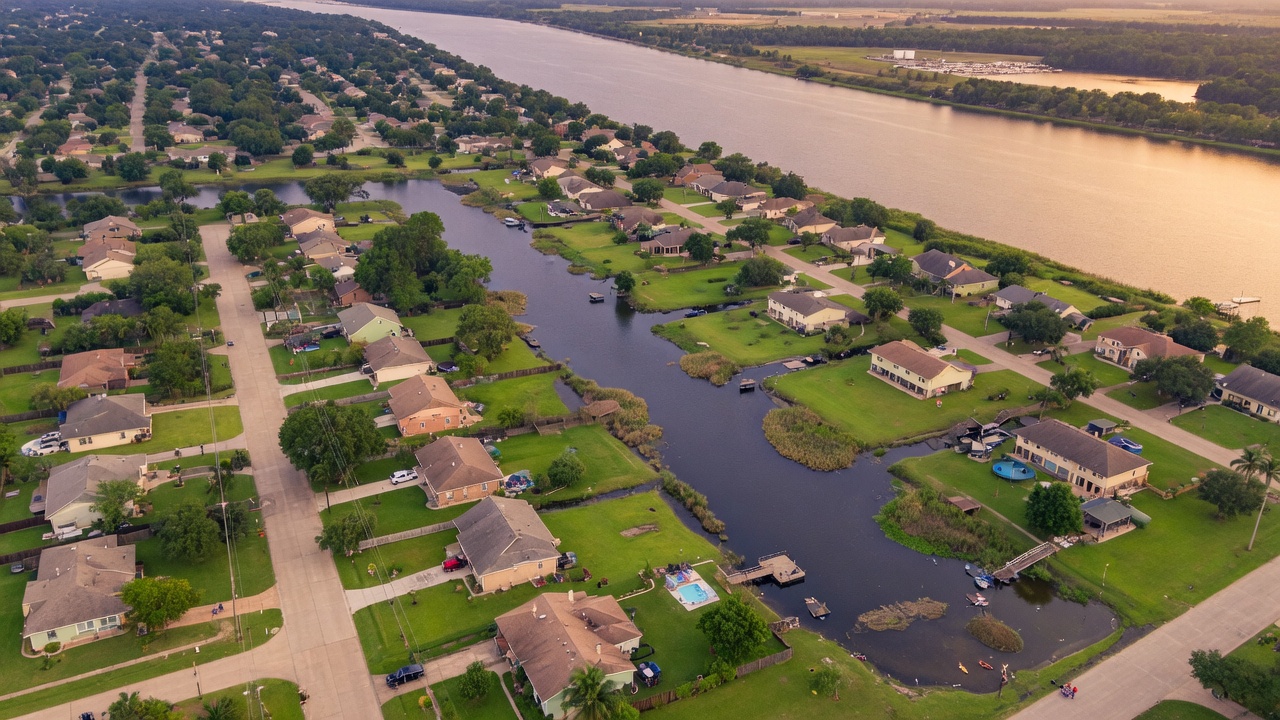
If you own a home or are shopping for one in the NE Houston area: Kingwood, Humble, Porter, Atascocita, New Caney, or anywhere along the San Jacinto River watershed; there's an important development you should be aware of. FEMA has released preliminary draft flood maps for Harris and Montgomery Counties, and when finalized, they could change which properties are considered at risk of flooding and, consequently, which homeowners are required to carry flood insurance.
This isn't cause for panic, the maps are still in draft form and won't take effect for another two to three years. But it is cause for attention. Whether you're a long-time homeowner in Kingwood or a buyer evaluating properties in Porter, understanding what these maps mean and how flood zones work in Texas is one of the smartest things you can do right now.
Why FEMA Is Redrawing the Maps
FEMA periodically updates its Flood Insurance Rate Maps (FIRMs) to reflect changes in terrain, development, drainage infrastructure, and hydrological data. In the NE Houston area, years of new construction, channel modifications, and improved flood modeling have prompted a comprehensive reassessment. The Harris County Flood Control District's MAAPnext project has been a major contributor to the updated data, using modern elevation models and storm simulations that simply weren't available when the current maps were drawn.
Some areas may see their flood risk downgraded, moving from a high-risk zone to a moderate or low-risk zone. Others may see their risk upgraded, meaning new flood insurance requirements. The exact impact varies street by street, which is why blanket predictions are unreliable and checking your specific property matters.
Understanding Flood Zones in Plain Language
FEMA categorizes properties into flood zones based on their probability of flooding. Here's what the designations most relevant to the NE Houston area actually mean:
- Zone AE (High-Risk): This is the 100-year floodplain, a 1% annual chance of flooding. If your home is in Zone AE and you have a federally backed mortgage, flood insurance is mandatory. This is the zone most Kingwood residents along the San Jacinto and its tributaries are familiar with, particularly after Hurricane Harvey.
- Zone X (Minimal Risk): Areas outside the 100-year and 500-year floodplains. Flood insurance is not federally required, though it's still available and often advisable, especially in Houston, where intense rain events can cause localized flooding even outside designated zones.
- Zone X (Shaded) / Zone B: The 500-year floodplain, a 0.2% annual chance of flooding. Flood insurance isn't required but is strongly recommended. Many homes in Humble and portions of Atascocita fall into this category.
The key thing to understand: the difference between Zone AE and Zone X isn't just a label. It can mean thousands of dollars per year in mandatory flood insurance premiums, a cost that directly affects your monthly payment and your home's marketability.
What This Means for the NE Houston Area Specifically
The NE Houston area has a unique relationship with flood risk. Properties near the San Jacinto River, Lake Houston itself, and the various creeks and bayous that feed into them have historically been in or near high-risk zones. After Harvey, many homeowners experienced flooding for the first time, and the subsequent infrastructure improvements, including channel modifications and detention basin construction by the Harris County Flood Control District, have genuinely reduced risk in some areas.
The new draft maps reflect some of these improvements. Early reports suggest that certain neighborhoods in Kingwood and Humble may see favorable changes, potentially moving from Zone AE to Zone X. That's good news for those homeowners, both for insurance costs and property values. However, other areas, particularly in newer development corridors around Porter and New Caney, may see updated risk designations that reflect growth-related changes in drainage patterns.
Here's the critical detail: these maps are still preliminary. The formal consultation, public comment, and appeals period will unfold over the next two to three years. The maps won't become official until that process is complete. But if you're buying or selling in the NE Houston area now, you need to know where things are heading.
How Flood Zones Affect Your Home Purchase or Sale
For buyers, flood zone designation affects three things: insurance cost, mortgage qualification, and long-term risk. A home in Zone AE will require flood insurance if you're using a conventional, FHA, or VA loan, and that premium gets factored into your monthly payment. If you're working to understand what you can truly afford each month, my Texas-specific payment calculator includes room for flood insurance and property taxes so you see the real number, not just the mortgage estimate.
For sellers, flood zone status is now a standard disclosure item, and today's buyers are more flood-aware than ever. A home that was unaffected by Harvey may still sit in a high-risk zone, and buyers will ask about it. Having clear documentation, your elevation certificate, flood zone designation, claims history, and any mitigation improvements, positions you as a prepared seller and prevents surprises during due diligence. If you're considering selling and want to understand what your home is worth factoring in these variables, request a free home valuation that accounts for real market conditions, not just a Zillow algorithm.
Five Practical Steps You Can Take Right Now
Whether you plan to stay for decades or sell in the next year, these steps put you in a stronger position:
- 1. Look up your current flood zone. Visit the Harris County Flood Education Mapping Tool (FEMA's free online portal) and enter your address. Know your current designation, not just what your neighbor told you after Harvey.
- 2. Check the draft maps. The Harris County Flood Control District's MAAPnext portal shows the preliminary changes. If your property's zone is shifting, it's better to know now than at closing.
- 3. Review your flood insurance. If you're in Zone AE, make sure your coverage limits match your replacement cost, not just your purchase price. If you're in Zone X, consider a low-cost preferred risk policy. Flood insurance is available even when not required, and the cost difference can be minimal.
- 4. Factor flood risk into your home search budget. If you're buying in the NE Houston area, the monthly payment isn't just principal, interest, taxes, and insurance. Flood insurance can add $500 to $3,000+ per year depending on zone, elevation, and the property's flood history. Use my Comfort Range Finder to back-calculate what you can truly afford each month, all-in.
- 5. Talk to an advisor who knows the area. Flood zones aren't the only thing that matters, lot elevation, proximity to bayous, community drainage infrastructure, and historical flood performance all tell part of the story. I review these details for every property I evaluate, whether you're buying or selling.
The Bigger Picture: Flood Risk and Property Value
Flood zone designation doesn't just affect insurance, it affects marketability and long-term value. Properties that move from high-risk to lower-risk zones typically see a measurable increase in buyer demand and sale price. Properties that move in the opposite direction may face headwinds, particularly as buyers become more flood-aware and insurance costs rise.
For the NE Houston area, the overall trajectory is positive. The infrastructure investments made since Harvey, including the Kingwood Diversion Channel improvements, additional detention capacity, and the ongoing Harris County bond-funded projects, are real and meaningful. But every property is different, and the impact of the new maps will vary.
If you're wondering whether now is the right time to buy or sell given the evolving flood landscape, my Buy Now or Wait comparison tool runs a 12- and 24-month analysis based on your specific numbers, including insurance trends and market conditions. It's a starting point for a much more useful conversation.
Bottom Line
The new FEMA flood maps are coming, and they'll reshape the conversation about flood risk and insurance costs across the NE Houston area. This isn't something to fear; it's something to prepare for. The homeowners and buyers who understand their flood zone status, have appropriate coverage, and factor flood risk into their financial planning will make better decisions and avoid costly surprises. If you'd like a straightforward review of what the draft maps mean for your specific property, let's talk. That's exactly the kind of clear, structured conversation I'm here for.