
Buying a home in the NE Houston area is exciting. You find a place that feels right, the kitchen works, the backyard has shade, and you can picture your life there. But between that moment and the moment you get the keys, there's a step that separates a smart purchase from an expensive surprise: the home inspection. If you're buying in Kingwood, Humble, Porter, Atascocita, New Caney, or anywhere along the NE Houston corridor, understanding what inspectors actually look for — and why it matters more here than in some other parts of the country — will save you money, stress, and second-guessing.
Why the NE Houston Area Is Different
Every region of the country has its own set of home inspection challenges. In the Northeast, it's old plumbing and ice dams. In the Southwest, it's termites and UV damage. In the NE Houston area, the inspection landscape is shaped by a specific combination of factors that make certain issues more common and more consequential than they might be elsewhere:
- Expansive clay soil. The Houston region sits on some of the most expansive clay soil in North America. When it rains, the soil swells. During drought, it shrinks. This constant cycle puts tremendous stress on concrete slab foundations, and it's the single most common source of inspection findings in the area.
- Intense heat and humidity. The Houston metro regularly exceeds 95°F with high humidity from May through October. That puts enormous strain on HVAC systems, accelerates roof deterioration, and creates conditions where moisture intrusion and mold can develop in places you'd never see without an inspection.
- Flood history and drainage. Many NE Houston area properties have some relationship to water — proximity to the San Jacinto River, Lake Houston, creeks, or bayous. Even homes outside high-risk flood zones can have drainage issues that affect the foundation and the yard. Post-Harvey awareness has made drainage a front-of-mind concern for every buyer.
- Mixed housing stock. The NE Houston area ranges from 1980s-era Kingwood homes to brand-new construction in Porter and New Caney. That means inspectors encounter everything from original galvanized plumbing and outdated electrical panels to freshly installed systems that haven't been stress-tested yet. Each era brings its own inspection profile.
The Big Six: What Inspectors Check and What It Means
A standard Texas home inspection covers the structure, roof, electrical, plumbing, HVAC, and interior/exterior components. But within each category, NE Houston area homes tend to generate specific findings more often than the national average. Here's what to watch for:
1. Foundation and Structural Integrity
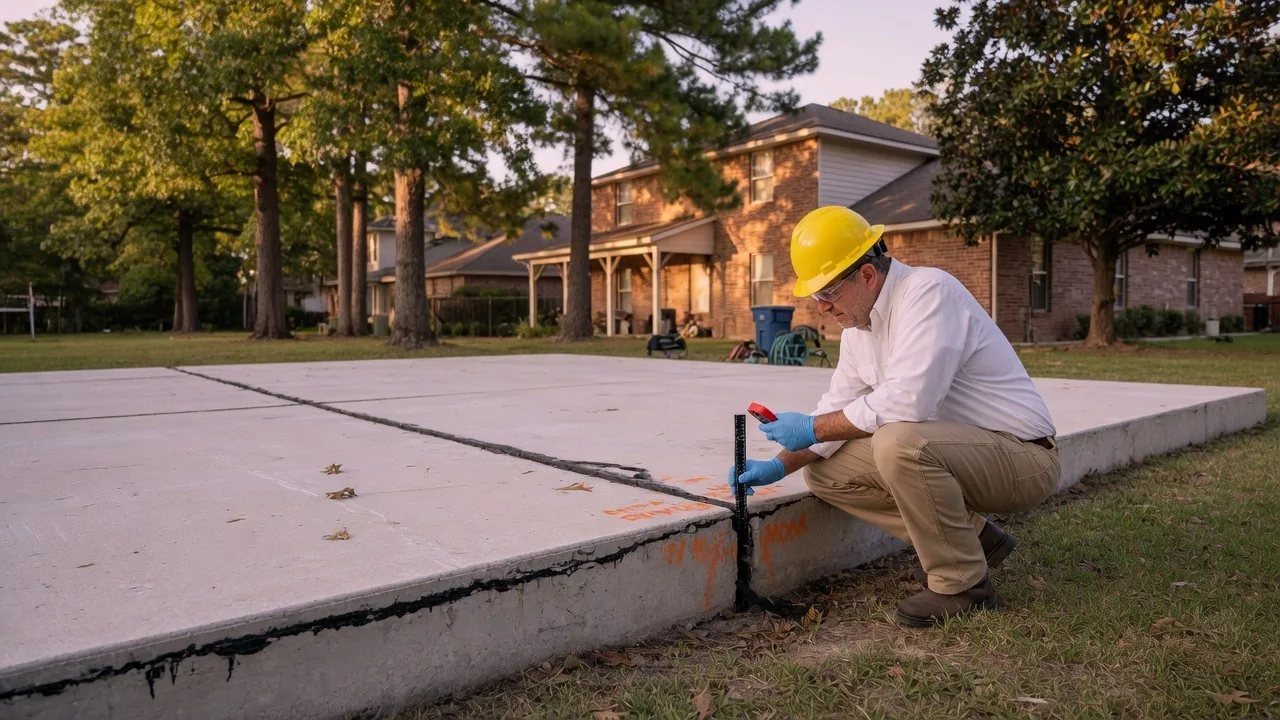
This is the number one concern in the NE Houston area, and for good reason. Houston's expansive clay soil — often called "black gumbo" — expands and contracts dramatically with moisture changes. Over years, this movement causes concrete slab foundations to shift, crack, and settle unevenly. An inspector will look for:
- Cracks in the slab, interior walls, or exterior brick — hairline cracks are common and often cosmetic, but cracks wider than 1/4 inch or diagonal cracks at corners of doors and windows may indicate differential settlement
- Doors and windows that stick or don't latch properly — a classic sign of frame shifting
- Visible gaps between the foundation and exterior walls
- Previous foundation repair history — pier installations, mud jacking, or hydraulic lifting
In Kingwood, where much of the housing stock dates to the 1980s and 1990s, foundation movement is extremely common. Most homes have experienced some degree of settling over 30 to 40 years, and that's not automatically a deal-breaker. What matters is whether the movement is active or has been stabilized, and whether the home has been properly maintained with consistent watering of the foundation perimeter, functioning gutters, and appropriate drainage. In newer Porter and New Caney construction, foundation issues tend to be less common early on, but clay soil doesn't care about the age of the house — it affects new builds too, especially in the first three to five years before the landscape matures.
2. Roof Condition
The NE Houston area gets hammered by sun, wind, heavy rain, and the occasional hail event. An asphalt shingle roof that might last 25 to 30 years in a milder climate often reaches the end of its useful life closer to 20 years here. Inspectors will check for:
- Granule loss — when asphalt shingles lose their protective granules, you'll see bare spots or granules in the gutters. This is one of the earliest signs of a roof nearing the end of its life.
- Lifted, curling, or missing shingles — often caused by wind damage or adhesive failure in the Texas heat
- Flashing condition around vents, chimneys, and valleys — improper flashing is one of the most common sources of leaks
- Sagging or soft spots in the roof deck, which can indicate moisture damage or structural concerns underneath
A roof replacement in the Houston area typically runs between $8,000 and $20,000 depending on the size, material, and complexity of the roofline. If the inspector flags a roof with fewer than three to five years of remaining life, that's a negotiating point, not necessarily a reason to walk away. The key is knowing what you're inheriting.
3. HVAC System
In the NE Houston area, your HVAC system isn't optional — it's the most critical system in the house. It runs eight months a year, sometimes around the clock during the worst of summer. An inspector will evaluate:
- Age of the system — most AC units in the Houston area have a useful life of 12 to 18 years. A 15-year-old unit that's been running through Kingwood summers is likely nearing replacement.
- Ductwork condition — gaps, disconnections, or deteriorated insulation in the attic lead to significant efficiency loss and higher energy bills
- Refrigerant levels and cooling performance — a system that can't maintain temperature during a Texas summer is a red flag
- Condensate drain line — if this line clogs (common in our humid climate), water backs up and can cause ceiling damage or trigger the overflow switch
A new HVAC system in the Houston area costs between $7,000 and $15,000 depending on the size of the home and the efficiency rating. If you're buying a home where the AC is at the end of its expected life, factor that cost into your offer or negotiate a credit. This is one area where the difference between "works fine right now" and "will need replacement within two years" can mean thousands of dollars.
4. Plumbing
Plumbing findings vary significantly by the age of the home, and the NE Houston area has a wide range:
- Homes built before the mid-1990s may still have galvanized steel supply lines, which corrode internally over time, reducing water pressure and eventually leaking. Replacing galvanized plumbing with copper or PEX can cost $4,000 to $10,000+ depending on the scope.
- Slab leak risk — in homes with plumbing routed beneath the concrete slab, a leak in those lines is harder to detect and more expensive to repair. The inspector will note signs of previous slab leak repair, such as patched concrete or hot spots on the floor.
- Water heater age and condition — most water heaters last 8 to 12 years in the Houston area. The inspector will check the manufacture date, look for corrosion, and assess whether the unit is properly strapped (required by Texas code).
5. Electrical System
Electrical findings are more common in older Kingwood homes, but they show up across all ages in the NE Houston area:
- Outdated electrical panels — Federal Pacific, Zinsco, or other recalled panel brands that are safety concerns and can make a home difficult to insure
- Insufficient amperage — many 1980s-era homes were wired with 100-amp service, which may not be enough for modern electrical loads, especially if the home has been expanded or has high-demand appliances
- Aluminum branch wiring, found in some homes from the 1970s and early 1980s, which has a higher fire risk than copper and may affect insurance availability
6. Moisture, Drainage, and Exterior
This is the category that ties everything together in the NE Houston area. Moisture is the common thread behind many of the most serious inspection findings:
- Grading and drainage around the foundation — the soil should slope away from the house, not toward it. Poor grading is one of the easiest issues to fix and one of the most commonly ignored.
- Gutter condition and downspout routing — in the Houston area's heavy rain events, gutters that are missing, clogged, or dumping water directly against the foundation are asking for trouble.
- Moisture in the attic or crawlspace — improper ventilation, missing vapor barriers, or roof leaks can lead to mold, which is not just a structural concern but a health concern.
- Exterior wood rot — the humidity accelerates rot on fascia boards, window frames, and door frames, especially on homes that haven't been recently painted or sealed.
New Construction vs. Resale: Different Homes, Different Findings
The NE Houston area has a mix of established resale homes and significant new construction, particularly in Porter, New Caney, and parts of Atascocita. The inspection profile is different for each:
- Older Kingwood homes (1980s–1990s) tend to generate findings related to aging systems: HVAC replacement, roof age, galvanized plumbing, outdated electrical panels, and foundation settling. These aren't necessarily deal-breakers — most 30-year-old homes have some of these issues — but they represent real costs that should be factored into your offer or negotiated.
- New construction in Porter and New Caney brings a different set of concerns. Builders cut corners, and inspection findings on new homes often include incomplete grading, missing insulation, improperly sealed penetrations, HVAC systems that haven't been commissioned correctly, and cosmetic shortcuts that signal rushed construction. A new home should still be inspected, and it should pass with fewer major findings, but "new" doesn't mean "perfect."
- Humble and Atascocita resale homes fall somewhere in between. Many were built in the late 1990s through the 2010s, so the systems are newer but may be approaching maintenance milestones. Roof age, HVAC condition, and drainage are the primary areas to watch.
What the Inspection Report Actually Tells You
A home inspection report is not a pass-or-fail test. It's a condition assessment. The inspector documents what they observe, categorizes findings by severity, and provides context. Most Texas inspection reports separate findings into three tiers:
- Major defects — items that are significantly damaged, non-functional, or safety hazards. A failed HVAC system, an active roof leak, or a foundation with significant differential settlement would fall here. These items typically warrant repair requests or price adjustments.
- Moderate findings — items that are functional but showing age or wear, or that will need attention within one to three years. A roof with five years of remaining life, an aging water heater, or minor plumbing leaks fall here. These are often the basis for negotiation.
- Maintenance items — minor items that are part of normal homeownership. Caulking around a bathtub, a missing attic access cover, or a GFCI outlet that needs resetting. These are informational, not negotiation points.
How to Use Inspection Results Wisely
Here's where I see buyers make two equally costly mistakes. The first is panicking. A 30-page inspection report with dozens of findings looks alarming, but most of those items are routine. The inspector is documenting the condition of every system in the house — that's their job. The fact that a door latch is misaligned or a light switch plate is cracked doesn't mean the house is falling apart. The second mistake is dismissing. "The inspector said it was minor" is fine until that minor item becomes a $3,000 repair because it was ignored.
The right approach is to triage. Focus on the items that represent significant cost or safety risk, understand what they'll actually cost to address, and use that information to negotiate fairly. In a market like the NE Houston area right now, where inventory has risen and buyers have more leverage than they've had in years, inspection findings are a legitimate basis for price adjustments, repair requests, or credits at closing.
If you want to understand what a home's total cost of ownership looks like — including the repair and maintenance items an inspection might reveal — my Comfort Range Finder helps you back-calculate from your actual monthly budget to the home price you can genuinely afford, accounting for Texas property taxes, insurance, and the maintenance costs that online calculators skip entirely. It's a more honest starting point than a lender's pre-approval number, especially when you're factoring in the true cost of homeownership.
Should Sellers Get a Pre-Listing Inspection?
In the current NE Houston market, where buyers have options and are more discerning, a pre-listing inspection is one of the smartest investments a seller can make. Here's why: when you know what the buyer's inspector is going to find, you control the narrative. You can make repairs before listing, price the home accurately with full disclosure, or offer credits upfront. All three options put you in a stronger negotiating position than being surprised by a buyer's inspection report two weeks into the contract.
A pre-listing inspection typically costs $350 to $500 in the Houston area. Compare that to the $5,000 to $15,000 in credits or price reductions that can result from a surprise buyer inspection, and the math is straightforward. If you're considering selling, my Seller Prep Kit walks you through the full preparation process, including why a pre-listing inspection matters and how to address findings before they become negotiating leverage for the other side. And to understand what your home is worth in today's market after accounting for condition, request a free, comparable-based home valuation.
Supplemental Inspections to Consider
A standard home inspection covers the major systems, but in the NE Houston area, several supplemental inspections are worth considering depending on the property:
- Termite/WDI inspection. Termites are active throughout the Houston area, and a Wood Destroying Insect inspection is standard practice. Most lenders require one for conventional and FHA loans, but even if yours doesn't, it's worth the $75 to $150 to have one done. It's especially important for older Kingwood homes with extensive wood trim and landscaping contact.
- Foundation specialist inspection. If the general inspector flags significant foundation concerns, hiring a licensed foundation repair company to provide an independent assessment is a worthwhile investment. They can tell you whether the movement is active, what repairs would cost, and whether a warranty exists from previous work.
- Sewer scope. A camera inspection of the main sewer line from the house to the street can reveal root intrusion, bellied pipes, or cracked sections that a standard inspection can't see. This is particularly valuable for older homes where the sewer line may be original and the trees have had decades to grow into it.
- Pool inspection. If the home has a swimming pool, a pool-specific inspection evaluates the equipment, decking, plaster condition, and safety compliance. Pool repairs can be expensive, and a failing pool equipment system can cost $3,000 to $8,000 to replace.
The Cash-to-Close Connection
One practical point that often gets overlooked: your inspection findings can affect your cash-to-close calculation. If you negotiate a seller credit for repairs, that credit reduces the amount you need to bring to closing, but it also affects the net picture for both sides. If you're budgeting for closing and want to see the full picture of what you'll need at the table — down payment, closing costs, prepaids, and any credits or adjustments — my Buyer Cash to Close tool breaks it all down so there are no surprises on closing day.
And if the inspection results make you pause and wonder whether you should keep looking or push forward, that's exactly what my Buy Now or Wait comparison tool is for. It runs a 12- and 24-month analysis based on your specific financial situation, so you can evaluate whether acting on this property makes sense or whether continuing to search is the smarter play.
Five Steps to a Smarter Inspection Process
- 1. Hire a qualified inspector. In Texas, home inspectors are licensed by TREC (Texas Real Estate Commission). Ask for your inspector's license number, check their reviews, and make sure they have experience with the type of home you're buying. A Kingwood resale and a new-build in Porter require different expertise.
- 2. Attend the inspection. There's no substitute for walking through the property with the inspector. You'll see findings in context, ask questions in real time, and develop a much better understanding of the home than a written report alone provides.
- 3. Read the full report, not just the summary. The summary highlights the big items, but the body of the report often contains context, photos, and explanations that help you understand the severity and urgency of each finding.
- 4. Get repair estimates before negotiating. If the inspector flags an HVAC issue or a roof concern, get a real quote from a licensed contractor before you decide how to negotiate. Knowing the actual cost prevents both overreacting and underestimating.
- 5. Work with an advisor, not just an agent. The inspection report is data. Interpreting that data in the context of your budget, your timeline, and your goals is where advisory matters. I review every client's inspection findings with them, not to make the decision for them, but to make sure they have the full picture before they commit.
Bottom Line
A home inspection in the NE Houston area isn't just a box to check — it's your best protection against expensive surprises and your strongest tool for making an informed decision. The clay soil, the heat, the humidity, and the range of housing stock from 1980s-era Kingwood to brand-new Porter construction all mean that what you find in an inspection report matters more here than it might in some other markets. Understanding what to expect, how to interpret the findings, and how to use them wisely is the difference between a home purchase you feel confident about and one that haunts you for years.
If you're buying in the NE Houston area and want an advisor who will walk you through every step — from the first showing to the inspection to closing day — with a calm, structured, data-driven approach, that's exactly what I do. Schedule a free 15-minute consultation and we'll talk through your situation, your numbers, and your timeline. No pressure, no sales pitch, just clarity. And if you want to run your own numbers first, visit the Tools and Resources page for the full set of calculators and guides I've built for NE Houston area buyers and sellers.