
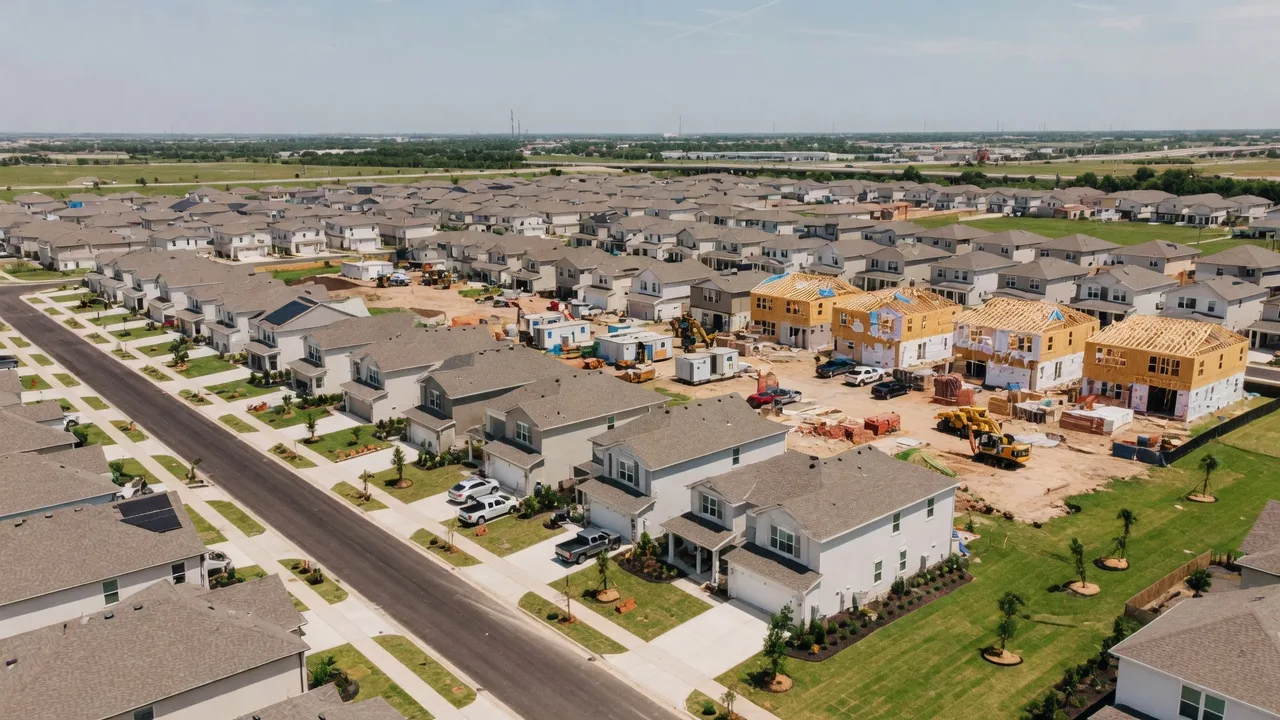
If you're house-hunting in the NE Houston area right now, you're probably weighing one question that didn't exist here a decade ago: new construction or resale? The Northeast Houston corridor, from Porter and New Caney through Kingwood, Humble, and Atascocita, has become one of the most active new-build markets in the entire Houston metro. But the decision between a brand-new home and an existing one in this area isn't as simple as "new is better." The real comparison involves taxes, total cost, neighborhood maturity, and tradeoffs that most buyers don't see until they're standing in a model home with a sales rep sliding a contract across the table.
Here's what actually matters when you're comparing these two options in the NE Houston area, no sales pitch, just the numbers and the reality.
The Northeast Houston Growth Corridor: Where New Construction Is Booming
The stretch along US-59 north of Kingwood has transformed in the last five years. The Grand Parkway extension unlocked massive residential development in Porter and New Caney, and builders followed. Communities like The Highlands, The Trails, Tavola, and Valley Ranch are driving thousands of new housing units into a corridor that was mostly piney woods and scattered acreage not long ago.
The numbers tell the story: Porter's 77365 ZIP code grew from roughly 12,000 housing units to over 15,400 between 2018 and 2023, and that pace has only accelerated. New Caney–Porter is projected to add approximately 18,500 new residential units by 2034. Builders like Lennar, DR Horton, Centex, Century Communities, and First America Homes are all active in this corridor, with price points typically ranging from the high $200,000s to the low $400,000s.
Meanwhile, established communities in Kingwood, Humble, and Atascocita offer a deep resale inventory of homes built between the 1980s and 2010s: mature trees, proven infrastructure, and neighborhoods with a track record. Both options are legitimate. The question is which one fits your situation.
Sticker Price vs. Total Monthly Cost
New construction in the Porter–New Caney corridor often looks competitively priced on paper. You might find a 2,200-square-foot, four-bedroom home in the low $300,000s, comparable to a resale in Kingwood or Humble. But the sticker price is where the similarity often ends.
The two biggest cost differences between new construction and resale in this area are property taxes and insurance. Both tend to run higher on new builds in the Northeast Houston corridor, and both directly affect what you pay every month.
Property taxes on a new home in a Montgomery County MUD can be meaningfully higher than on a comparable resale in an established Kingwood neighborhood, sometimes by $200 to $500 per month. If you're budgeting based on the home price alone, you'll underestimate your true cost. My Texas-specific Payment Calculator lets you model the full picture: mortgage, county and city taxes, MUD taxes, insurance, and HOA, so you see the real all-in monthly number before you commit.
MUD Districts: The Cost New Construction Buyers Often Miss
Most new construction communities in Porter and New Caney sit within Municipal Utility Districts, special taxing districts created to fund the water, sewer, and drainage infrastructure that makes development possible. MUDs levy a separate property tax on top of your county, school, and (if applicable) city taxes.
In the Northeast Houston corridor, new MUDs typically have tax rates ranging from $0.50 to over $1.35 per $100 of assessed value. On a $350,000 home, that's an additional $1,750 to $4,725 per year, or roughly $145 to $395 per month, on top of your other property taxes. By contrast, established Kingwood neighborhoods in mature MUDs (where most bonds have been paid off) often carry MUD tax rates well under $0.30 per $100, sometimes as low as $0.10.
This doesn't make new construction a bad deal, it means you need to compare total cost, not just home price. I wrote a detailed breakdown of MUD districts and what they actually cost NE Houston area buyers. It's worth reading before you sign a new-build contract.
Builder Incentives: Real Value or Shiny Object?
If you've visited a model home or browsed new construction listings, you've seen the incentive banners: rate buydowns, closing cost credits, design center upgrades. In the current market, many builders in the Porter–New Caney area are offering combined incentive packages valued between $10,000 and $35,000, with some exceeding that range for quick-move-in inventory.
The most common incentives include:
- Rate buydowns: temporary 2-1 buydowns or permanent buydowns that lower your mortgage rate for the life of the loan
- Closing cost credits: typically $5,000–$25,000 toward buyer closing costs
- Design center credits: allowances for upgrades like flooring, countertops, and fixtures
These incentives are real value, but they come with caveats. Most require you to use the builder's preferred lender, which may not offer the best rate once you account for the buydown structure. The design center credits only apply to upgrades you might not have chosen otherwise. And the most aggressive incentives often apply to standing inventory, not custom builds.
The right way to evaluate an incentive is to compare the total cost, not just the headline number, against what you'd pay with an outside lender and a resale home. My Comfort Range Finder helps you back-calculate from your actual monthly budget to the home price that works, including taxes, insurance, and HOA. Run it both ways, once with new-construction numbers and once with resale numbers, and the real comparison becomes clear.
Inspections: Yes, You Still Need One on New Construction
One of the most common misconceptions in new construction is that an independent home inspection is unnecessary because everything is brand new. In my experience, the opposite is true. New builds are inspected at various stages by the builder's own crew, but an independent inspector working for you catches things the builder's team may miss, or may not prioritize.
Common issues found in new construction inspections in the Houston area include:
- Improper grading or drainage that could direct water toward the foundation
- HVAC systems installed without proper refrigerant charge or airflow testing
- Roofing issues, such as missing drip edges, improper flashing, or shingles damaged during installation
- Plumbing connections with visible leaks or incomplete caulking around fixtures
- Electrical panels with loose connections or circuits that don't match the labeling
In Texas, you typically have the right to an independent inspection during the option period, a negotiated window (usually 7–14 days) where you can terminate the contract for any reason. For new construction, I strongly recommend scheduling both a general home inspection and a separate foundation inspection, especially in the Houston clay soil environment. This is your leverage to get issues fixed before closing, when the builder is most motivated to make corrections.
The 1-2-10 Builder Warranty: What It Covers and What It Doesn't
New construction homes in Texas typically come with a 1-2-10 builder warranty, which is an industry standard, not a state law, but widely offered by reputable builders. Here's what it covers:
- 1 year: Workmanship and materials, including paint, trim, drywall, doors, and cosmetic items
- 2 years: Major systems, including HVAC, electrical, and plumbing components
- 10 years: Structural components, including the foundation, load-bearing walls, and beams
Texas also recognizes an implied warranty of habitability, a common law protection that requires a newly built home to be safe, sanitary, and fit for living. This covers latent defects that make the home unlivable, and it generally cannot be waived by the builder.
The warranty is a real advantage of new construction, but it has limits. It covers defects, not normal settling or wear. And enforcing it often requires you to notify the builder in writing within specific timeframes. A resale home doesn't come with this warranty, but it also doesn't come with the risk of construction defects in the first place. Instead, a resale buyer relies on the home's known track record, a thorough inspection, and potentially a home warranty purchased at closing.
The Resale Advantages: What New Construction Can't Replicate
While new construction offers modern floor plans and builder warranties, established resale neighborhoods in the NE Houston area have advantages that no builder can manufacture overnight:
- Mature trees and landscaping. Kingwood's identity as "The Livable Forest" isn't just marketing; it's decades of growth that provides shade, privacy, and genuine character. A new-build lot with saplings is a fundamentally different living experience than a Kingwood home under a canopy of 40-year-old pines.
- Established infrastructure. Resale neighborhoods come with proven drainage, mature utility systems, and streets that have been through multiple hurricane seasons. New construction corridors are still building out their infrastructure, and things like road completion, park development, and commercial amenities can lag years behind the home construction.
- Lower property taxes. As covered above, established neighborhoods without active MUD bonds, or with significantly reduced MUD rates, can save you hundreds per month compared to a new-build community. Over a 10-year ownership period, that difference compounds significantly.
- Known flood history. A resale home in Kingwood or Humble has a documented flood history. You can ask neighbors, check claims records, and evaluate the property based on real events. A brand-new community may not have that data yet, and the drainage infrastructure hasn't been tested by a major storm.
- Negotiating leverage. In today's market with rising inventory, resale sellers are often more flexible on price, repairs, and closing cost contributions than builders, who use standardized pricing and incentive structures that leave less room for individual negotiation.
The Insurance Reality for Both Options
Homeowner's insurance is a significant cost factor in the Houston area regardless of whether you buy new or resale, but the dynamics differ. New construction homes often qualify for lower windstorm and structural premiums because they're built to current code, including newer wind mitigation standards and modern roofing materials. Resale homes, particularly those built before 2002, may carry higher premiums due to older construction standards.
However, new construction in flood-prone areas of the NE Houston corridor doesn't automatically come with lower flood insurance premiums. Your flood zone designation, and whether FEMA has recently redrawn maps for the area, affects both options. I covered the new FEMA flood maps and what they mean for NE Houston homeowners in a separate post, and it's essential reading for anyone buying in this area.
Who Each Option Serves Best
There's no universal right answer, but there are patterns worth knowing:
- New construction often works well for buyers who want a modern floor plan, are less sensitive to total monthly cost (including MUD taxes), value a builder warranty, and are comfortable with a community that's still developing around them. It's also a strong fit for buyers who want to customize finishes and don't want to deal with the renovation process of an older home.
- Resale often works well for buyers who prioritize total monthly cost, want to be in an established neighborhood with mature trees and proven infrastructure, prefer lower property taxes, value the ability to negotiate on price and repairs, and want a home with a known history. It's also the better choice for buyers who want to be in Kingwood's specific villages or Humble's established subdivisions, where new construction simply isn't available.
For "next-chapter" homeowners, people who've built equity over decades and are considering their next move, resale often makes the most sense because these buyers typically value the neighborhood maturity, lower carrying costs, and the ability to negotiate from a position of strength. But every situation is different.
Five Questions to Ask Before You Choose
Regardless of which direction you're leaning, these are the questions that matter most in the NE Houston area right now:
- 1. What's my true monthly cost? Not just the mortgage, include property taxes (including MUD), insurance, HOA, and maintenance. Run both scenarios through my Payment Calculator so you're comparing apples to apples.
- 2. What's my actual budget? A lender pre-approval tells you the maximum, not what's comfortable. Use the Comfort Range Finder to back-calculate from your real monthly budget to a home price that works without financial stress.
- 3. How long do I plan to stay? If you're looking at a 3–5 year horizon, the total cost picture changes significantly compared to a 10+ year hold. My Buy Now or Wait tool runs side-by-side projections to help you see the impact of timing.
- 4. Is the community where I want to live, or where it will be? Visit the new-construction neighborhood on a weekday, not just a Saturday model-home tour. Talk to residents. Check what's actually built versus what's planned. The brochure shows a finished vision; the reality may be years from completion.
- 5. Am I factoring in the full cost of selling? If you're selling a current home to buy, the timing and cost of that transition matter enormously. My Move Timeline Planner maps out the sell-then-buy versus buy-then-sell paths so you don't end up carrying two mortgages.
Bottom Line
The NE Houston area offers genuinely strong options on both sides of this decision. New construction in Porter and New Caney brings modern homes, builder incentives, and warranty protection. Resale in Kingwood, Humble, and Atascocita brings mature neighborhoods, lower taxes, and a known track record. The worst thing you can do is choose based on the sticker price alone. The real comparison is total cost, neighborhood fit, and how the decision aligns with the next chapter of your life.
That's exactly the kind of analysis I do for every client, structured, data-driven, and built around your actual numbers. If you'd like a personalized comparison for your specific situation, schedule a free 15-minute consultation. No pressure, just clarity. And if you want to explore the full set of tools I've built for NE Houston area buyers, visit the Tools and Resources page.