
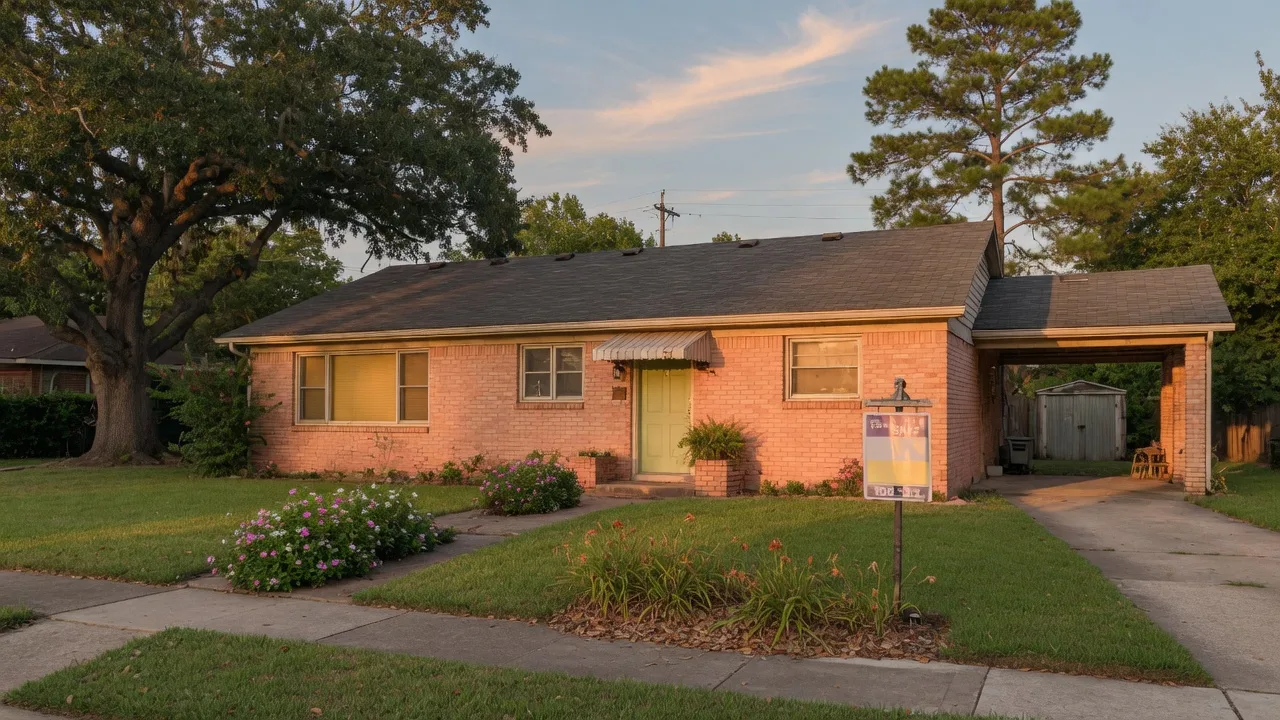
Buying a fixer-upper in the Northeast Houston area can stretch your budget further, but it comes with real costs and risks that only show up after you own the home. This guide covers what to look for in Kingwood, Humble, Atascocita, Porter, New Caney, Dayton, Crosby, and Huffman, how to finance both the purchase and the work, and the inspections that protect you before you commit. You will finish knowing whether a project home is the right move for you, and the exact tools that will put a real number on the total cost.
Quick Answer:
A fixer-upper is a home that needs meaningful work before it is truly livable or worth its potential value. In the Northeast Houston area, project homes can sell below the price of move-in-ready homes, but the savings only materialize if you budget the renovation honestly and inspect the big-ticket systems first. The reliable approach is to price the home and the work together before you make an offer, not after.
What counts as a fixer-upper in the Northeast Houston area
A fixer-upper is not one thing. It can be a home in Kingwood with dated kitchens and baths that need refreshing, an older brick house in Humble with a worn roof and an aging air conditioner, or an acreage property in Huffman or Dayton that needs a new well pump, septic work, or a full interior. The common thread is that the work is real enough to affect the price, and the buyer takes on the project rather than a move-in-ready home.
The honest way to think about a fixer-upper is as two purchases in one: the home itself and the renovation that makes it yours. In Atascocita and Porter, where newer master-planned communities dominate, project homes are rarer and often sell quickly to investors. In New Caney, Dayton, Crosby, and Huffman, homes on larger lots with older systems are more common, which means more room to negotiate but also more to verify. The right question is not whether a home needs work, but whether you can afford the work without breaking your budget or your timeline.
Why a project home can make sense, and when it does not
The appeal is straightforward: you can often buy more house, or a better location, for less money. A dated home in a sought-after Kingwood village can cost meaningfully less than the same floor plan updated, and the sweat equity you add can build value over time. For buyers who are handy, patient, or working with a trusted contractor, a fixer-upper can be the smartest path to the neighborhood they want.
But a fixer-upper is not for everyone. If you need to move in quickly, if your budget has no room for surprises, or if you do not have a reliable contractor, a project home can become a source of stress and unexpected expense. The buyers who succeed treat the renovation as part of the purchase decision, not an afterthought. If you are not sure whether you are truly ready to take on a project, my What's Your Next Move? decision guide helps you sort out where you actually are before you commit to a path.
The real cost of renovations in the Houston area
Renovation costs vary widely with the scope and the finishes, but published 2026 Houston-area guides give useful ranges. Lighter cosmetic work, like flooring, paint, and fixtures, tends to run about $75 to $125 per square foot, while mid-range remodels with kitchen and bath updates run roughly $125 to $200 per square foot. Full gut renovations start around $80 to $100 per square foot and can climb well past $200 for high-end finishes. Angi pegs the average complete house renovation in Houston at about $39,000, with a typical range from roughly $15,000 to $66,000 depending on the size of the home and the quality of the work.
The takeaway is that a $250,000 home in Porter with $60,000 of needed work is really a $310,000 decision, and you should compare it against a move-in-ready home at a similar total. That is why the first step on any fixer-upper is a realistic renovation budget, not a guess. Use my free comfort range finder to back-calculate the total home price your monthly budget supports, then run the all-in payment, including Texas property taxes, insurance, and any HOA or MUD lines, through the Texas-specific payment calculator.
Financing a fixer-upper: FHA 203(k) and other options
Most buyers assume they need cash for the renovation on top of the down payment, but there are loan programs built for exactly this situation. The FHA 203(k) loan rolls the purchase price and the renovation cost into a single mortgage, so you finance the work instead of paying for it out of pocket. The minimum down payment is 3.5 percent of the combined purchase and renovation total for borrowers with credit of 580 or higher, and your debt-to-income ratio is typically capped around 43 percent.
There are two versions. The Limited 203(k) covers up to $75,000 for minor, non-structural repairs, which suits many homes in Kingwood, Humble, and Atascocita that mainly need cosmetic updates. The Standard 203(k) handles major structural work, requires a minimum renovation of $5,000, and brings in a HUD-approved consultant to oversee the project. Under either program, the work must begin within 30 days of closing and be completed within about six months, and the lender pays the contractor from an escrow account on a draw schedule tied to inspections. Conventional renovation loans and cash offers are also options, and your lender can compare which fits your situation best.
Because the loan amount includes the renovation, the monthly payment reflects the finished home, not the project price. That is exactly why you want the total cash picture clear before you sign. My buyer cash to close tool walks through the down payment, closing costs, prepaids, and Texas-specific fees so you know what you actually need at the table, on top of any renovation reserve you plan to keep.
The inspections that matter most in the Northeast Houston area
On a fixer-upper, the inspection is where you learn whether the discount is real or whether the home is a money pit. Across the Kingwood, Humble, Atascocita, Porter, and New Caney corridor, four findings tend to dominate inspection reports, and you should budget for all of them before you make an offer.
- Foundation settling. Houston sits on expansive clay soil that swells when wet and shrinks in drought, which stresses slabs and produces wall cracks, sticking doors, and uneven floors. This is the most common issue across the area, and repairs commonly run from about $5,000 to more than $30,000 depending on the extent. Kingwood's dense tree canopy can hold moisture against foundations longer, so drainage and grading matter there especially.
- Termites. Subterranean termites, including the destructive Formosan variety, are a real threat in Harris County, and the wooded setting across the Northeast Houston area raises the pressure. A termite or wood-destroying insect inspection is standard on virtually every home in the region, and it is non-negotiable on a fixer-upper.
- Flood history. Homes near the San Jacinto River in parts of Kingwood, Humble, and Atascocita have a more complex flood-risk profile, and the May 2024 storms brought renewed evacuations in parts of the area. Check the flood zone, the flood history, and the insurance picture before you fall for the price.
- Roof and HVAC age. Aging roofs are one of the most common surprises, and Texas heat runs air conditioners under continuous load, so their useful life tends to be shorter than the national average, often around 12 to 15 years. Replacing either is a five-figure line item you want in your budget, not a surprise after closing.
A thorough inspection, plus a separate termite inspection and a flood-zone check, is the difference between a smart project and a costly mistake. If you want to understand a town before you tour, start with my Kingwood neighborhood guide, the Humble guide, or the Porter guide, and use the Northeast Houston overview to compare how the towns differ.
Budgeting the full cash picture before you commit
The discipline that separates successful fixer-upper buyers from the rest is simple: treat the purchase and the renovation as one number. Add the offer price, the renovation estimate with a healthy contingency, and the closing costs, then compare that total against move-in-ready homes in the same town. If the project total does not beat the finished alternative by a meaningful margin, the fixer-upper is not actually a bargain.
Texas layers matter too. Property taxes are based on the appraised value, which can rise after you renovate, and newer subdivisions in Porter, New Caney, and Dayton often carry MUD assessments on top of regular taxes. Homeowners insurance in the Houston area has been climbing, and a home with an older roof or flood history will cost more to insure. All of it belongs in the monthly number before you sign, which is what the payment calculator is built to show you.
If you are weighing whether to buy now or hold out for a move-in-ready home, the buy now or wait comparison runs the math over 12 and 24 months so the timing decision is based on numbers rather than headlines. And if you want a clear picture of what a finished home might be worth down the road, the real estate wealth calculator projects equity growth over 5, 10, and 15 years so you can see whether the sweat equity is worth the effort.
The bottom line
A fixer-upper in the Northeast Houston area can be a smart way to buy into a town you love at a price you can manage, but only when the numbers are honest. Budget the renovation, verify the big-ticket systems with real inspections, and compare the project total against finished homes in Kingwood, Humble, Atascocita, Porter, New Caney, Dayton, Crosby, or Huffman before you commit.
As a Northeast Houston area advisor, my job is to help you think the decision through, not rush you into one. Start with my free, no-pressure home valuation if you already own a home you might sell to fund the next one, or explore the tools and resources hub to keep every calculator and guide in one place. I am always a call away at 918-688-1428 when you want a second set of eyes on the numbers.
Frequently Asked Questions
How much does it cost to renovate a fixer-upper in Kingwood or Humble?
Lighter cosmetic work in the Houston area typically runs about $75 to $125 per square foot, while mid-range remodels with kitchen and bath updates run roughly $125 to $200 per square foot. A full gut renovation can start around $80 to $100 per square foot and climb higher, so the honest approach is to get contractor estimates on the specific home before you make an offer.
Can I finance both the purchase and the renovation in one loan?
Yes. An FHA 203(k) loan rolls the purchase price and the renovation cost into a single mortgage with a minimum down payment of 3.5 percent for borrowers with credit of 580 or higher. The Limited version covers up to $75,000 for minor repairs, while the Standard version handles major structural work with a HUD-approved consultant.
What inspections should I get before buying a fixer-upper in Porter or New Caney?
At minimum, get a full home inspection, a separate termite or wood-destroying insect inspection, and a flood-zone and flood-history check. Foundation condition, termite activity, roof and HVAC age, and flood risk are the findings that most often change the math on a project home in the Northeast Houston area.
Is a fixer-upper actually cheaper than a move-in-ready home in Atascocita or Dayton?
Only if you budget the renovation honestly. Add the offer price, the renovation estimate with a contingency, and closing costs, then compare that total against move-in-ready homes in the same town. If the project total does not beat the finished alternative by a meaningful margin, the fixer-upper is not really a bargain.
What are the biggest risks of buying a fixer-upper in the Northeast Houston area?
The biggest risks are hidden system failures: foundation settling, termites, flood history, and aging roofs or air conditioners. These are the findings that can turn a discount into a loss, which is why a thorough inspection before you commit is the single most important step on any project home.