
Quick Answer:
A mortgage appraisal is a licensed appraiser's estimate of what a home is worth today, and your lender uses it to decide how much they will finance. If the appraisal comes in below your offer price, the difference is called the appraisal gap, and you bridge it with cash, by renegotiating, or by using your appraisal contingency. In Kingwood, Humble, Atascocita, Porter, New Caney, Dayton, Crosby, and Huffman, appraisals rest on recent sales of comparable homes, so the better the comps, the smoother the process.
What a mortgage appraisal is, and what it is not
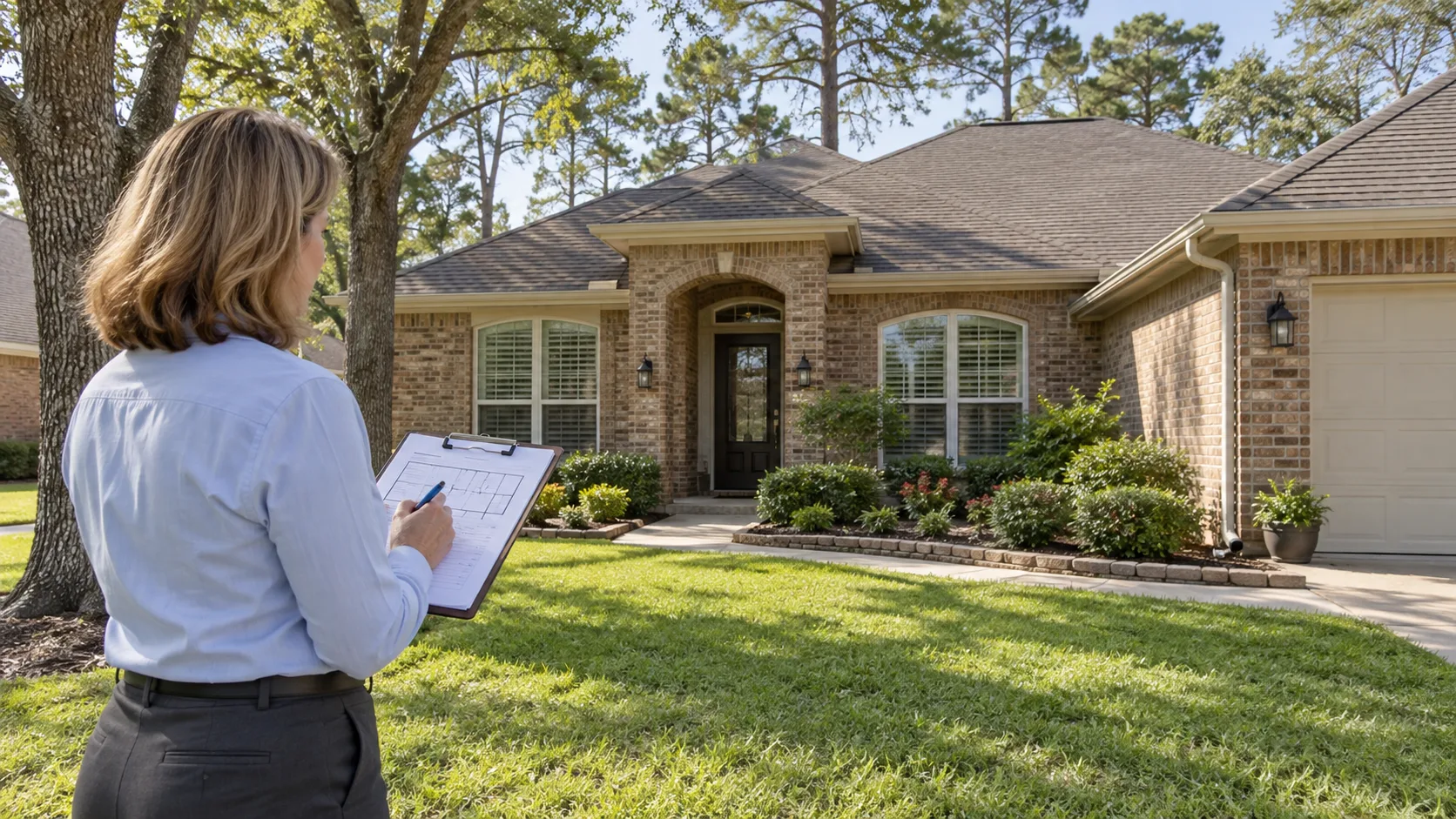
A mortgage appraisal is an independent, licensed estimate of a home's market value, ordered by your lender after your offer is accepted. The appraiser physically visits the property, measures the home, photographs the rooms and exterior, and reviews recent sold listings of similar homes in the area to arrive at a number. That number tells the lender the loan is sound: they will lend based on the lower of your contract price or the appraised value, so they are never financing more than the home is worth in their view.
The appraisal is not a home inspection and it is not a recommendation to buy. It protects the lender, but it protects you too, because it is an independent check on whether the price you agreed to matches what the market actually supports. Buyers in Humble and Atascocita who understand this before they make an offer handle the appraisal step with far less anxiety, because they have already thought through what they will do if the number comes back low.
The mortgage appraisal is not your property tax appraisal
This is the confusion I hear most often from homeowners in the Northeast Houston area, and it matters in Texas more than almost anywhere else. Your mortgage appraisal is different from the value your county appraisal district assigns for property taxes. In Kingwood, Humble, Atascocita, Crosby, and Huffman, the Harris County Appraisal District sets the tax value; much of Porter and New Caney sits under the Montgomery County Appraisal District; and Dayton falls under Liberty County. Those districts estimate market value as of January 1 each year for taxation, and that number is what your annual property tax bill is built on.
A mortgage appraisal, by contrast, is a point-in-time lending value on your specific transaction, based on a full inspection of the home you are buying and the sales that closed around it. The two numbers can differ by tens of thousands of dollars and usually do, in both directions. A home in Kingwood can have a tax value well below what buyers are paying, because the appraisal district's estimate lags the market or because a homestead exemption is lowering the taxable amount. Do not use one number to predict the other, and never skip researching taxes just because the appraised value looked low.
How appraisers pick comparables in the eight towns
The heart of any appraisal is the comparable sales the appraiser selects, usually three to six recent closed transactions of homes as similar as possible in size, age, condition, and lot. Then the appraiser makes dollar adjustments for the differences that remain, a newer kitchen here, a third garage bay there, a bigger lot in Crosby versus a smaller one in Kingwood. Where your town is in that process changes what the appraiser leans on.
In Kingwood, appraisers work at the village level. A home in a Kingwood village competes against recent sales inside that same village, because buyers are comparing the trail systems, the tree canopy, the lot sizes, and the Humble ISD attendance zones. Kingwood's mature inventory means square footage and floor plan matter more than age alone, and a well-kept 1980s village home can appraise strongly against newer construction once adjustments are made.
In Humble, the market splits between older established neighborhoods minutes from downtown Humble and the newer developments filling in toward the airport corridor. Appraisers there compare within the same neighborhood and era of construction, an older Humble bungalow is not a comp for a two-year-old home near IAH, even when the square footage is close. Atascocita works similarly in sections: Summerwood, Eagle Springs, Fall Creek, and the Atascocita communities each carry their own price layer, and appraisers stay inside the section to avoid skewing the value.
In Porter and New Caney, new construction drives the market, and appraisers lean heavily on recent builder closings in the same subdivision. When several identical floor plans close within the preceding few months, the appraisal is usually straightforward. In Dayton, Crosby, and Huffman, acreage changes everything. Land value is a big share of the price, wells and septic systems are common, outbuildings and fences carry value, and comparable sales are spread over a wider area, so the appraiser's judgement about land and improvements matters more. There is no one-size-fits-all comp mix across the eight towns, which is exactly why working with an advisor who knows each town's inventory pays off.
If you are comparing towns before you decide where to look, my Kingwood guide, my Humble guide, and the Northeast Houston overview break down how homes, lots, and price points differ from one town to the next, which is the same context an appraiser weighs.
How to prepare for the appraisal, whether you are buying or selling
As a buyer, you do not order the appraisal yourself; your lender does, and you typically pay for it as part of closing costs. What you can do is make the property easy to appraise. Confirm the home is accessible, interior and exterior, so the appraiser can complete a full inspection on the scheduled visit. If you know the home received meaningful updates, a new roof in Porter, a kitchen remodel in Humble, a new AC in Atascocita, share the documentation with your lender. Your lender can pass it along, and some of that detail can support the valuation. It is also fair to ask your agent to share their own comparable sales analysis with the lender before the appraisal, so the appraiser is not working from an empty slate.
Sellers should care about appraisals too, because the buyer's lender will order one during the contract period, and a low number can stall or undo a deal that looked done. The same preparation that sells a home helps it appraise: a decluttered interior, freshly cut lawn in Kingwood or Huffman, obvious repairs handled, and a property that shows its best in photos and in person. If you are thinking about selling, get a real valuation before you list rather than guessing, my free home valuation request gives you an honest starting point, and my seller prep kit walks through the pre-listing checklist step by step.
What happens when a home appraises low: the appraisal gap
The appraisal gap is the difference between the appraised value and your contract price. It happens most often with newer or unique properties, fast-moving markets where offers run ahead of recent sales, and acreage homes in Dayton, Crosby, and Huffman where comps are thin. Because your lender funds on the appraised value, the gap is not a rounding error; it is a real shortfall you have to account for before closing.
You have five realistic options. First, pay the difference in cash on top of your down payment. Second, renegotiate with the seller, either down to the appraised value or to a middle number. Third, use an appraisal gap clause, which commits you to cover a set amount, often written for a defined dollar figure in Texas, and protects you if the gap lands inside that cap. Fourth, ask your lender about a reconsideration of value, where you and your agent present additional comparable sales and the appraiser takes another look. Fifth, walk away using your appraisal contingency, which is exactly why that contingency belongs in your contract. An FHA buyer cannot be forced to close a deal where the price exceeds the appraised value, so the contingency is real protection, not paperwork.
Many buyers in competitive rounds in Porter and New Caney deliberately strengthen their offers with appraisal gap coverage, because sellers weigh the risk of a failed deal when they choose between offers. Just know what you are promising before you write it, a gap clause is a commitment to bring cash if the appraisal lands low. My free buyer cash to close tool lays out your down payment, closing costs, and prepaids in one place so you can see whether covering a potential gap is realistic before you promise it in an offer.
FHA versus conventional appraisals: the rules differ
The loan program changes the appraisal rules. FHA appraisals must be completed by an appraiser on the FHA roster, and the property has to meet FHA's minimum property requirements covering health, safety, and structural integrity. That is why the roof, the foundation, and peeling paint can stop an FHA deal in its tracks before value is even the question. The FHA appraisal attaches to the property rather than to you, it stays valid for 180 days, and if you switch lenders or another FHA buyer steps in before it expires, the appraisal can transfer, so you do not pay twice for the same number.
Conventional appraisals, the kind tied to most standard loans, belong to the lender that ordered them and generally do not transfer if you change lenders mid-stream. They are typically considered current for about 120 days, with updates extending the usable life up to a year in some cases. The practical takeaway: if you are financing with FHA in Humble or Atascocita, your appraisal is more portable than you might expect, and if you are mid-purchase with a conventional loan and considering a lender switch, expect the new lender to want their own appraisal.
What the appraised value means for your monthly payment
The appraised value also shapes your monthly payment through the loan-to-value ratio. A lower appraised value on the same contract price means a higher loan-to-value ratio, which can raise your private mortgage insurance premium and sometimes your rate. That is why the appraisal conversation is really a monthly budget conversation, and it belongs in the same planning session as property taxes and homeowners insurance.
Run the numbers with my free Texas-specific payment calculator, which builds in the property taxes and insurance that drive real payments in the Northeast Houston area, and check your comfort range with the comfort range finder so the price you offer is one your budget can carry even if the appraisal comes in a little low.
The bottom line
An appraisal is not a hurdle to fear; it is a checkpoint that protects everyone at the table. When you know how appraisers pick comparables in Kingwood, Humble, Atascocita, Porter, New Caney, Dayton, Crosby, and Huffman, when you understand that the tax value is a different number, and when you have a plan for the appraisal gap, the checkpoint stops being stressful. The buyers who handle this step the best are the ones who prepared their budget and their contingency before the offer, not after the appraisal.
If you are buying or selling in the Northeast Houston area and want an advisor who runs the appraisal math with you instead of hoping for the best, my free tools and resources hub collects every calculator and guide in one place, and I am always happy to walk through your specific numbers on a quick call.
Frequently Asked Questions
What happens if the appraisal comes in lower than my offer in Kingwood, Humble, or anywhere else in the Northeast Houston area?
You have five options: pay the difference in cash, renegotiate the price with the seller, rely on an appraisal gap clause you included in the offer, ask the lender for a reconsideration of value with additional comparables, or walk away using your appraisal contingency. Your contract's appraisal contingency is what keeps that last option available.
Is my property tax appraisal the same as the mortgage appraisal?
No. The county appraisal district in Harris, Montgomery, or Liberty County sets a value as of January 1 each year for property taxes, and your mortgage lender orders an independent appraisal of the specific home you are buying. The two numbers often differ, so never assume one predicts the other.
Can an FHA appraisal transfer to a different lender or a different buyer?
Yes, in most cases. The FHA appraisal attaches to the property and stays valid for 180 days, so if you switch lenders or another FHA buyer takes over the contract before it expires, the appraisal can be transferred and you avoid paying for a second one.
Who pays for the appraisal and how long is it valid?
The buyer pays for the appraisal, typically a few hundred dollars settled as part of closing costs through the lender. FHA appraisals are valid for 180 days, while conventional appraisals are generally current for about 120 days and may be updated rather than redone.
Does a low appraisal mean the deal is dead in the Northeast Houston area?
Not usually. Most low appraisals get resolved by renegotiating the price, splitting the difference, or bringing extra cash to closing. In competitive areas like Porter and New Caney, many buyers plan for a possible gap in advance by including appraisal gap coverage in their offers.