
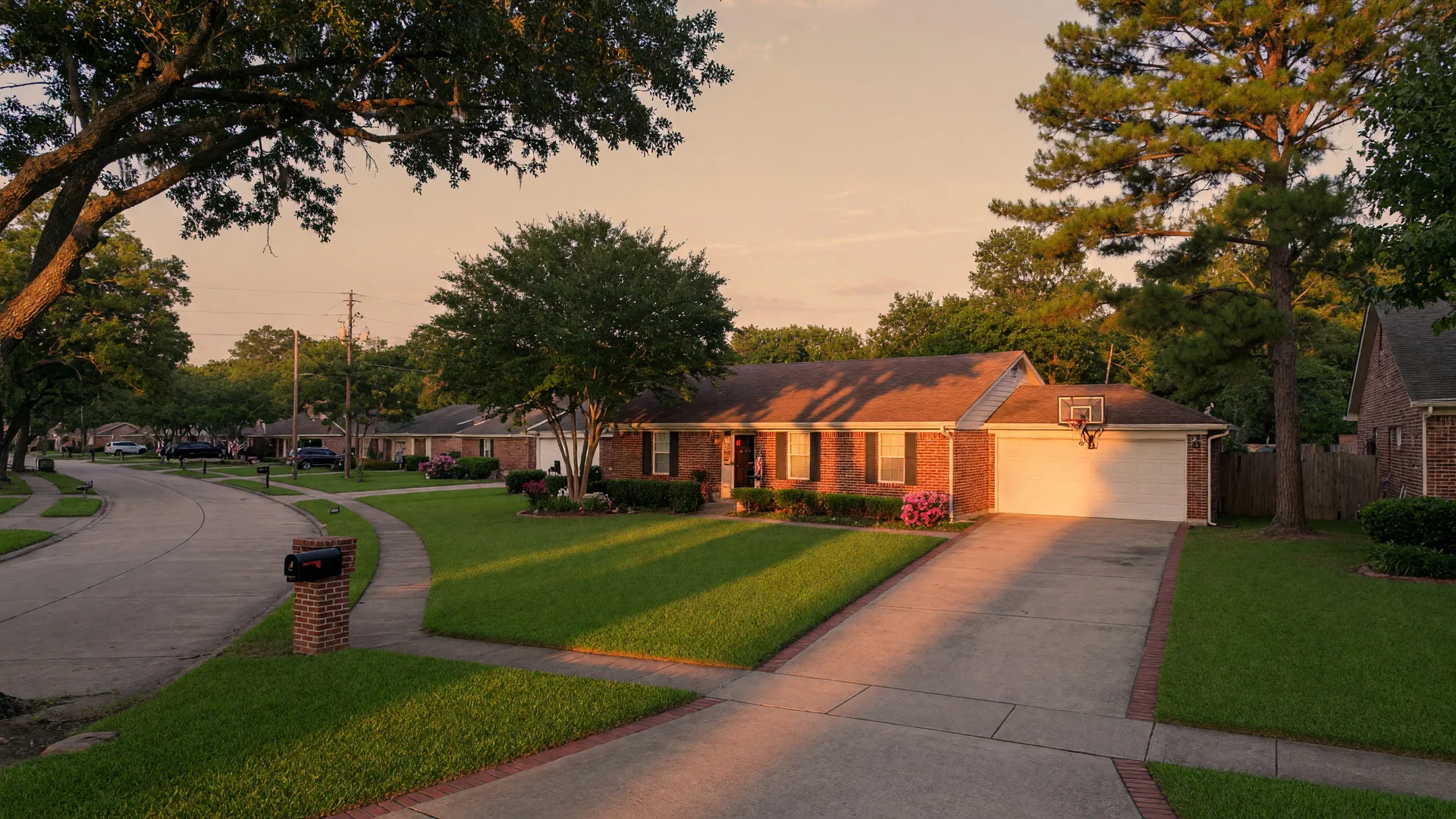
For homeowners in Kingwood, Humble, Atascocita, Porter, New Caney, Dayton, Crosby, or Huffman, the equity in your home is usually the largest single financial asset you own, and knowing its real size is the first step in any next move. This guide explains how to estimate your equity, what it actually becomes when you sell, and how to use it to fund your next home in the Northeast Houston area. You will finish with a clear picture of whether tapping your equity makes sense now, and the exact tools that will put a real number on it.
Quick Answer:
Home equity is your home's current market value minus what you still owe on it. In the Northeast Houston area, where prices have climbed substantially over the past decade, many homeowners in Kingwood, Humble, Atascocita, and Porter hold meaningful equity even if they have never refinanced. The reliable way to size it is a market-based valuation of your specific home rather than an automated online estimate, because equity is only as accurate as the value it starts from.
What home equity is and why it matters
Equity is simply your home's current market value minus the balance left on your mortgage. Two engines build it. Every mortgage payment pays down a little more principal, which grows your ownership share, and your home's value generally rises over time as the market in your town appreciates. One 2026 industry analysis put average homeowner equity in Texas above $63,000, up about 61 percent since 2020, a reminder that even homes bought in unglamorous years have quietly built real wealth for their owners.
A quick example makes the math concrete. Imagine a home in Kingwood that sold for $280,000 a decade ago and appraises at about $400,000 today, with a remaining mortgage around $180,000. That owner holds roughly $220,000 in equity, which is far more than most people accumulate in checking, savings, and retirement accounts combined over the same period. Across the Northeast Houston area, the same pattern repeats at every price point, which is why equity conversation belongs near the top of any housing decision, whether you are thinking about selling, buying, or staying put.
How equity tends to differ across the Northeast Houston towns
Equity is personal to your exact house, your purchase year, and your town, so the ranges below are directional, not a promise. They come from published 2025 and 2026 price data, and the honest number for your home still needs a comparables-based valuation. Here is how the picture tends to shape up across the Northeast Houston area:
- In Kingwood, median sold prices sit in the high $300s to low $400s depending on the village, and residents often hold their homes for a decade or more, which tends to produce the deepest equity in the region. Long tenure plus steady pricing is a strong equity combination.
- In Humble, lower entry prices near the airport mean buyers needed less to get in, and owners who bought years ago have watched values rise while their payments stayed fixed, building equity on a more affordable base.
- In Atascocita, medians have run around $298,000 to $305,000, with newer master-planned communities like Fall Creek and The Groves sitting higher. Newer homes have less tenure behind their equity, but appreciation in those communities has been real since the early 2020s.
- In Porter, medians have ranged from about $295,000 to $342,000, and the growth along the Grand Parkway has lifted values for owners who bought before the building boom. Recent buyers with large mortgages have thinner equity, which is normal early in ownership.
- In New Caney, published data shows the median easing from roughly $296,000 to about $275,000 over the past year, so a very recent buyer may have modest equity or even a paper pullback. Owners with several years of tenure are generally in a much different position.
- In Dayton, medians have sat in the mid-$300s by some measures and near $238,000 by others, and many homes sit on larger lots in Liberty County, where land value tends to hold its ground even when building cycles cool.
- In Crosby, the median has held near $254,000 with modest year-over-year movement, which makes it a stable, affordable equity story for owners who bought several years ago rather than a fast-appreciation one.
- In Huffman, medians have run from around $251,000 to the low $300s, and the draw has always been bigger lots and more trees. Land-oriented equity tends to feel durable there because the scarcity is the setting itself.
If you want to know where your own home stands, my Kingwood neighborhood guide and the Northeast Houston overview can help you understand your town's character, but the number you need comes from homes like yours that actually sold recently. Automated estimates miss condition, updates, and lot specifics, which is exactly why I recommend a free, no-pressure home valuation as the starting point for any equity decision.
Selling is the most direct way to turn equity into cash
The cleanest way to use your equity is to sell, walk away with your net proceeds, and put that cash toward your next chapter. But the headline number and the check you receive are different things. Selling costs money: the listing commission, title and escrow fees, prorated property taxes for the part of the year you no longer own the home, and sometimes seller concessions to a buyer. Texas has no property transfer tax, which is a genuine advantage over many states, but the other line items are real.
Net proceeds are what remain after the mortgage payoff, the closing costs, and any concessions. In Kingwood and Atascocita, where prices are higher, that number can still be substantial, and in Humble, Porter, New Caney, Dayton, Crosby, and Huffman, even a modest equity position usually leaves a meaningful down payment for your next home. My net proceeds estimator walks through every line item so you see the real number before you commit to a move, not after.
One Texas advantage sellers should know: because the state has no income tax, there is no state capital gains tax on a home sale to plan around. At the federal level, most homeowners exclude up to $250,000 of gain as a single filer, or $500,000 as a married couple filing jointly, if they have lived in the home for two of the past five years. That means for most families in the Northeast Houston area, the equity you built is yours to keep and reinvest. When you are ready to prepare the home, the seller prep kit lays out exactly what to fix, clean, stage, and price before the sign goes in the yard.
Using your equity to fund the next home
For most buyers, the equity from a sold home becomes the down payment and part of the closing cash on the next one. If your Kingwood or Atascocita sale frees up $120,000, that is a 20 percent down payment on a $600,000 home, or a much bigger down payment on a more modest one in Porter, New Caney, or Dayton, where entry prices are lower. A larger down payment means a smaller loan, lower monthly payment, and usually a better rate, so the equity you bring forward compounds again in the new house.
The smart sequence is to work backward from your monthly comfort zone before you shop. Use my free comfort range finder to back-calculate the home price your budget supports, then run the all-in payment, including Texas property taxes, insurance, and HOA or MUD lines, through the Texas-specific payment calculator. A home you can buy and a home you can comfortably keep are different questions, and the tools separate them cleanly.
Timing the two sides of the move is where most equity transitions get stressful. Selling first means you have the proceeds in hand but need a place to land, and buying first means you may carry two properties briefly. The move timeline planner maps a sell-then-buy or buy-then-sell path around your goal date so the equity arrives when you need it, not a month too late.
The Texas layers that change the numbers
Moving to a new primary residence in Texas means the homestead exemption does not follow you automatically; you file a new application on the new home with the correct appraisal district. Harris County Appraisal District covers Kingwood, Humble, Atascocita, Crosby, and Huffman, Montgomery County Appraisal District covers much of Porter and New Caney, and Dayton sits under Liberty County, each with its own rules and deadlines. On the buying side, many newer subdivisions in Porter, New Caney, and Dayton carry MUD assessments on top of regular property taxes, and homeowner insurance in the Houston area has been climbing, so the payment on the next house can look nothing like your current one.
None of this should scare you off; it should just be part of the math before you sign. That is what the payment calculator is built for, realistic all-in numbers rather than a principal-and-interest teaser. And if you are not yet sure whether selling, buying, or staying is the right direction, the What's Your Next Move? decision guide helps you sort out where you actually are before you commit to a path.
Project the long game, not just the closing table
Selling to unlock equity is one move; building it again in the next home is the other half of the plan. The real estate wealth calculator projects equity growth over 5, 10, and 15 years, so you can compare the wealth path of selling now versus holding, or renting while you wait. Timing questions, like whether buying now beats waiting 12 or 24 months, are better answered with the buy now or wait comparison than with headlines, because the math changes with your town, your price range, and your rate.
As a Northeast Houston area advisor, my job is to help you think the decision through, not rush you into one. I have helped homeowners in Kingwood, Humble, and Atascocita size their equity before a transition, and buyers in Porter, New Caney, Dayton, Crosby, and Huffman turn that equity into a strong offer. The tools and resources hub keeps every calculator and guide in one place, and I am always a call away at 918-688-1428 when you want a second set of eyes on the numbers.
The bottom line
Equity is the quiet wealth most homeowners are sitting on, and in the Northeast Houston area it has grown meaningfully over the past decade, from the established villages of Kingwood to the acreage lots of Huffman and the fast-growing lanes of Porter and New Caney. The reliable path is to get a real valuation of your home, run the net proceeds and the next payment side by side, and then decide with numbers instead of guesswork.
Start with my Humble neighborhood guide or the Kingwood guide to see where you might land next, then request your free home valuation so we are working from the real number. Whether you sell, buy, or stay, knowing your equity turns a big decision into a simple one.
Frequently Asked Questions
How do I know how much equity I have in my Kingwood or Humble home?
Start with your mortgage statement to confirm the remaining balance, then get a market-based valuation of your home's current value and subtract the first from the second. Online estimates can be off by 5 to 15 percent, so a comparables-based valuation from a local advisor is the number worth planning around.
If I sell, how much of my equity do I actually take away in the Northeast Houston area?
You receive your home's sale price minus the mortgage payoff, the listing commission, title and escrow fees, prorated property taxes, and any concessions you give the buyer. Texas charges no property transfer tax, which helps, and my net proceeds estimator shows every line item before you go under contract.
Can I use my equity to fund the down payment on my next home in Atascocita or Porter?
Yes. For most sellers, the net proceeds from the sale become the down payment and closing cash on the next home, and a larger down payment means a smaller loan and a lower monthly payment. The move timeline planner helps you sequence the sale and the purchase so the cash is in hand when you need it.
Do I pay capital gains tax when I sell my home in Texas?
Texas has no state income tax, so there is no state capital gains tax to worry about. Federally, most homeowners exclude up to $250,000 of gain as a single filer or $500,000 as a married couple filing jointly if they have lived in the home for two of the past five years, which covers the vast majority of local sales.
Is now a good time to sell my home in New Caney or Huffman and use the equity?
It depends on why you are moving more than on the calendar. New Caney has seen more inventory and some price easing, which rewards sellers who price carefully, while Huffman's land-oriented appeal keeps demand steady. Run the net proceeds and the next purchase together, and the timing answer usually becomes clear on its own.