
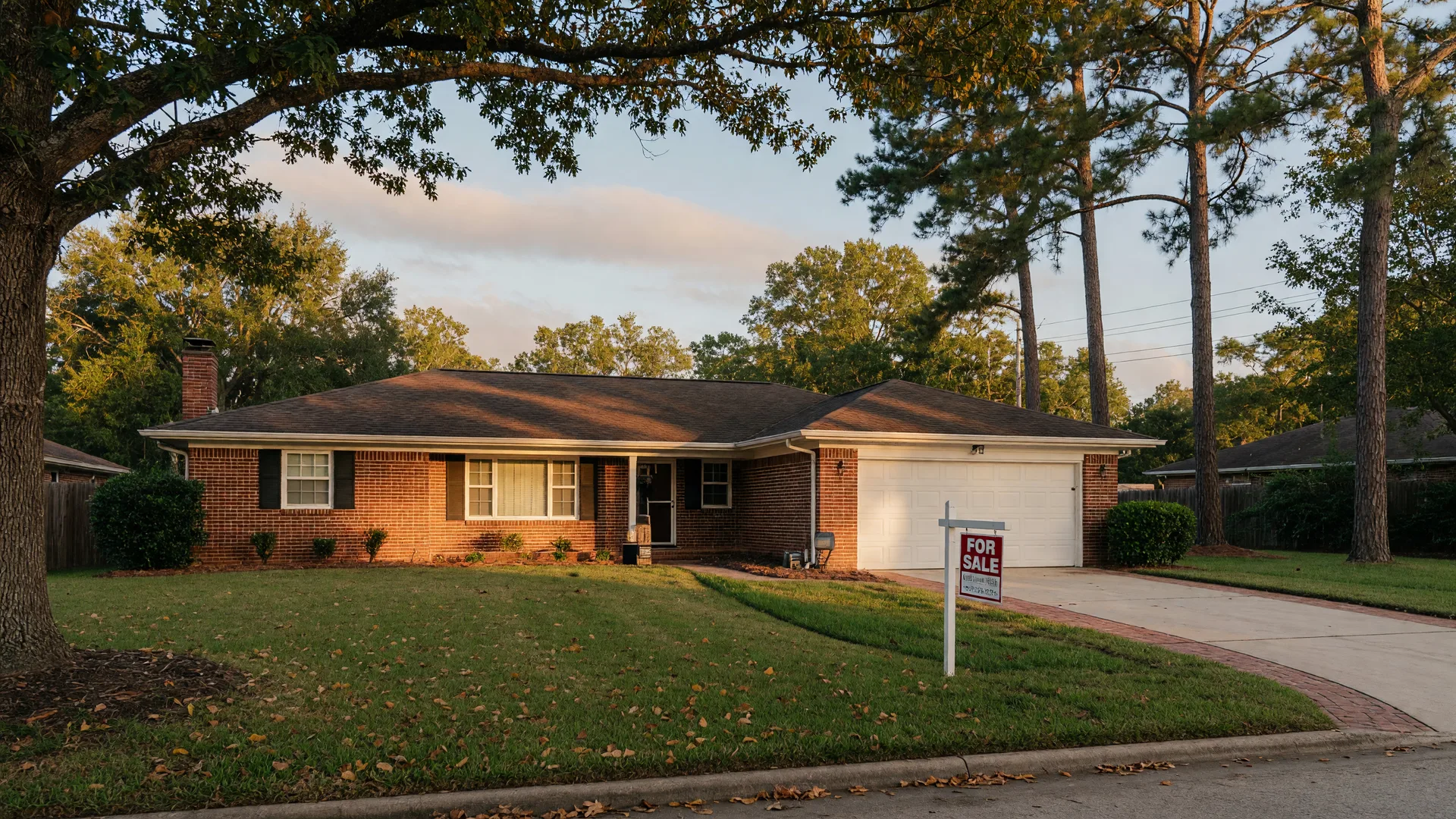
This guide walks homeowners in Kingwood, Humble, Atascocita, Porter, New Caney, Dayton, Crosby, and Huffman through every step of selling a home in the Northeast Houston area, from the first decision to the closing table. You will learn how to value your home honestly, calculate what you walk away with, prepare it to sell, price it against recent sales in your town, negotiate offers and inspection repairs, and coordinate your move to the next house. By the end, you will know exactly what to do next, and which of my free tools will keep each step on track.
Quick Answer:
Selling a home in the Northeast Houston area comes down to eight steps: decide what you want from the sale, get a real valuation, calculate your net proceeds, prepare the home, price it against recent sales in your town, list and market it, negotiate the offer and inspection, then close while coordinating your next move. Homes in Kingwood, Humble, Atascocita, Porter, New Caney, Dayton, Crosby, and Huffman each have their own buyer pool and their own pricing reality, so the process is the same but the details are local. The most common mistake is skipping the valuation and net-proceeds math before deciding to list.
Why a step-by-step plan matters when you sell
Selling is one of the largest financial transactions most people ever make, and the way I work with sellers is the way I practiced medicine: assess the whole picture, explain the options in plain language, and move forward on a structured plan rather than a rushed decision. In the Northeast Houston area, the market is not one market. Kingwood behaves differently from Humble, and a home in Huffman competes with different buyers than a home in Porter. A step-by-step plan keeps every decision, pricing, prep, offers, timing, connected instead of made in isolation.
The eight steps below are the exact framework I use with sellers in Kingwood, Humble, Atascocita, Porter, New Caney, Dayton, Crosby, and Huffman. Some steps take a weekend, some take a month, and some are one conversation. What matters is doing them in order, because each step feeds the next.
Step 1: Decide what you want from the sale
Before you worry about pricing or staging, get clear on why you are selling and what the proceeds need to do. Are you downsizing in Kingwood, relocating for work out of Humble, moving closer to family near Porter, or cashing out equity in Atascocita to start a new chapter? The answer changes the timeline, the price you need, and whether you sell first or buy first. Write down your goal date and the number the sale needs to produce, because every later decision, from repairs to offers, gets measured against those two numbers.
If you are not yet sure whether selling, buying, or staying put is the right direction, my free What's Your Next Move? decision quiz walks you through the three starting paths and points you to the tools that fit where you are. It takes a few minutes and gives you a clearer starting point than guessing.
Step 2: Get a real valuation of your home
An online estimate is a starting point, not a price. Automated models use broad data and often miss the things that matter locally: the condition of your roof and AC, your lot size in Huffman or Dayton, the school boundary your home sits in, the exact subdivision in Kingwood or Atascocita, and what similar homes in your town actually sold for in the last few months. A real valuation is built from recent, verified sales of comparable homes near yours, adjusted for condition, updates, and lot.
The reliable way to get that number is a comparables report from a local advisor. Request my free, no-pressure home valuation and I will put together a number based on your specific home and neighborhood, not an algorithm. You can request it before you have decided to sell, and there is no obligation attached.
Step 3: Know what you will actually walk away with
The sale price is not the number that funds your next move. Your net proceeds are the sale price minus the mortgage payoff, the listing commission, title and escrow fees, prorated property taxes, and any concessions you give the buyer. Texas has no property transfer tax, which helps, but the other line items add up, and sellers who skip this step are often surprised at the closing table.
Use my free Net Proceeds Estimator to see every line item before you go under contract, so you know what the sale actually produces. That number, not the list price, is what you plan your next move around.
Step 4: Prepare the home before the sign goes up
How a home shows decides how fast it sells and how close to asking it sells for. Buyers in Kingwood compare your home against other Kingwood villages, buyers in Humble and Atascocita compare within their price band, and buyers looking at Porter or New Caney often weigh your resale against brand-new construction nearby. The prep work is the same everywhere: declutter, deep clean, handle obvious repairs, improve curb appeal, and stage the rooms buyers care about most.
You do not need a full renovation to sell well in the Northeast Houston area, but you do need the home to look maintained. My free seller prep checklist walks through the pre-listing to-do list room by room, so nothing important gets skipped and you do not waste money on updates that will not pay off.
Step 5: Price it with evidence, not emotion
Pricing is the single most important decision in the sale, and it is a local decision. The right price for a home in Kingwood is set by recent sales in Kingwood, not by what a neighbor listed for or what you paid a decade ago. In Humble, buyers have more room to negotiate than they did a few years ago. In Atascocita, prices vary widely between established areas and newer master-planned communities. In New Caney, rising inventory means buyers compare more homes before they commit. In Porter, new construction sets the bar. In Dayton, Crosby, and Huffman, land and acreage matter as much as the house.
The honest truth is that a home priced above its comparables sits while buyers tour other options in the same town, and a home that sits too long starts to look stale. Price with evidence, not emotion, and you give the home its best chance at a fast, strong sale. That is exactly what my free home valuation is for: a current, comparables-based number for your exact home before you commit to a list price.
Step 6: List, photograph, and market your home
Once the home is prepped and priced, it is time to put it in front of buyers. Professional photography matters more than most sellers expect, because the first impression most buyers get is the listing photo on their phone. Good photos, an accurate description, and placement on the right listing platforms get the home seen by the buyers actually looking in Kingwood, Humble, Atascocita, Porter, New Caney, Dayton, Crosby, and Huffman.
Marketing also means scheduling showings that fit buyer availability, hosting open houses where they make sense, and following up with every agent who tours. The goal is not just views, it is showings, and not just showings, it is offers from qualified buyers.
Step 7: Review offers and handle the inspection
When offers arrive, the highest price is not always the best offer. Compare price, financing strength, down payment, contingencies, requested closing date, and the buyer's ability to close, because a strong offer that closes on time is worth more than a high offer that falls apart. Once you accept an offer, the buyer's inspection follows, and almost every inspection surfaces a list of requested repairs.
You do not have to fix everything the inspector finds. Safety issues and structural concerns matter most, and small cosmetic items are usually negotiable. The goal is a fair middle ground that keeps the deal moving. If the home appraises below the contract price, there are options too, from renegotiating to meeting in the middle, and an experienced advisor will walk you through each one.
Step 8: Close, and start your next move on time
The closing table is where everything comes together: the payoff, the prorated taxes, the title work, and your net proceeds. Texas closings are straightforward, but the logistics of moving out while the new owners move in take coordination. If you are buying your next home, the timing of the two closings is the part that stresses sellers out the most.
My free move timeline planner maps a sell-then-buy or buy-then-sell path around your goal date, so you are not carrying two mortgages or scrambling for temporary housing. And when you are ready to think about the next home, use my free Comfort Range Finder to back-calculate what your monthly budget supports, so the next search starts from a number you can actually afford in the Northeast Houston area.
How selling differs by town in the Northeast Houston area
The eight steps above apply everywhere, but the details are local, and that is where a Northeast Houston area specialist earns their keep. In Kingwood, buyers know the villages and compare within them, so pricing and prep are hyperlocal. In Humble, the buyer pool is price-sensitive and has more negotiating room than a few years ago. In Atascocita, the spread between established neighborhoods and newer communities means your exact subdivision matters more than the town average.
In Porter and New Caney, your home competes with new construction, so condition and lot matter, and MUD assessments on newer homes are part of the buyer's math. In Dayton, Crosby, and Huffman, acreage buyers care about land, trees, wells, and septic, and the house itself is often the second consideration. The Northeast Houston overview ties the towns together, and the individual guides for Kingwood, Humble, and Porter give you the local detail that a generic selling article cannot.
The bottom line
Selling a home in the Northeast Houston area is a process, and a good process produces a better result than a rushed one. Start with the decision, get a real valuation, run the net proceeds, prepare the home, price with evidence, market it well, negotiate thoughtfully, and close on a timeline that works for your next move.
Every calculator and guide I use with sellers in Kingwood, Humble, Atascocita, Porter, New Caney, Dayton, Crosby, and Huffman lives in one place on my free tools and resources hub, so you can run the numbers side by side without juggling tabs. When you are ready, request your free home valuation and we will start from the real number.
Frequently Asked Questions
How long does it take to sell a home in Kingwood or Humble?
It depends more on price and condition than on the calendar. Homes priced against recent sales in their own town and prepped to show well tend to go under contract quickly, while a home priced above its comparables can sit for weeks while buyers compare other options. Your agent should give you a realistic expectation based on your specific home, not a regional average.
Should I make updates before selling my home in Porter or New Caney?
Focus on condition issues and cheap wins before major renovations. Buyers in Porter and New Caney often compare your resale against new construction, so a clean, well-maintained home with an updated kitchen or bath where it matters can compete, but a full remodel rarely pays for itself. My seller prep checklist helps you separate the updates that pay off from the ones that do not.
How much does it cost to sell a home in the Northeast Houston area?
The main costs are the listing commission, title and escrow fees, prorated property taxes, and any concessions you give the buyer. Texas has no property transfer tax, which keeps the bill lower than in many states. Run the numbers through my net proceeds estimator before you list so there are no surprises at closing.
Do I have to fix everything the buyer's inspector finds?
No. Safety issues and structural concerns matter most, and smaller cosmetic items are usually negotiable. The goal is a fair agreement that keeps the sale moving, and most repair requests end in a middle ground after a short conversation. An experienced advisor will help you decide what to fix, what to credit, and what to decline.
Should I buy my next home before or after selling my current home in Atascocita or Huffman?
It depends on your cash position and your timeline. Selling first puts the proceeds in your hand but means you need a place to land, while buying first can mean carrying two properties briefly. My move timeline planner lays out both paths around your goal date so the timing works instead of working against you.