
Quick Answer:
Many acreage homes in the Northeast Houston area run on a private well and septic system rather than public utilities, and in Huffman, Dayton, and Crosby, that is the norm for larger lots. Before you make an offer on a home like this, budget for a certified well inspection and a separate water quality test, a septic inspection with a county permit check, and the ongoing maintenance the systems will demand. New wells commonly run $9,000 to $20,000, septic replacement runs from about $6,300 for a conventional system to $20,000 or more for an aerobic system, and annual upkeep adds a few hundred to roughly a thousand dollars a year depending on the system.
Why wells and septic systems show up in these towns
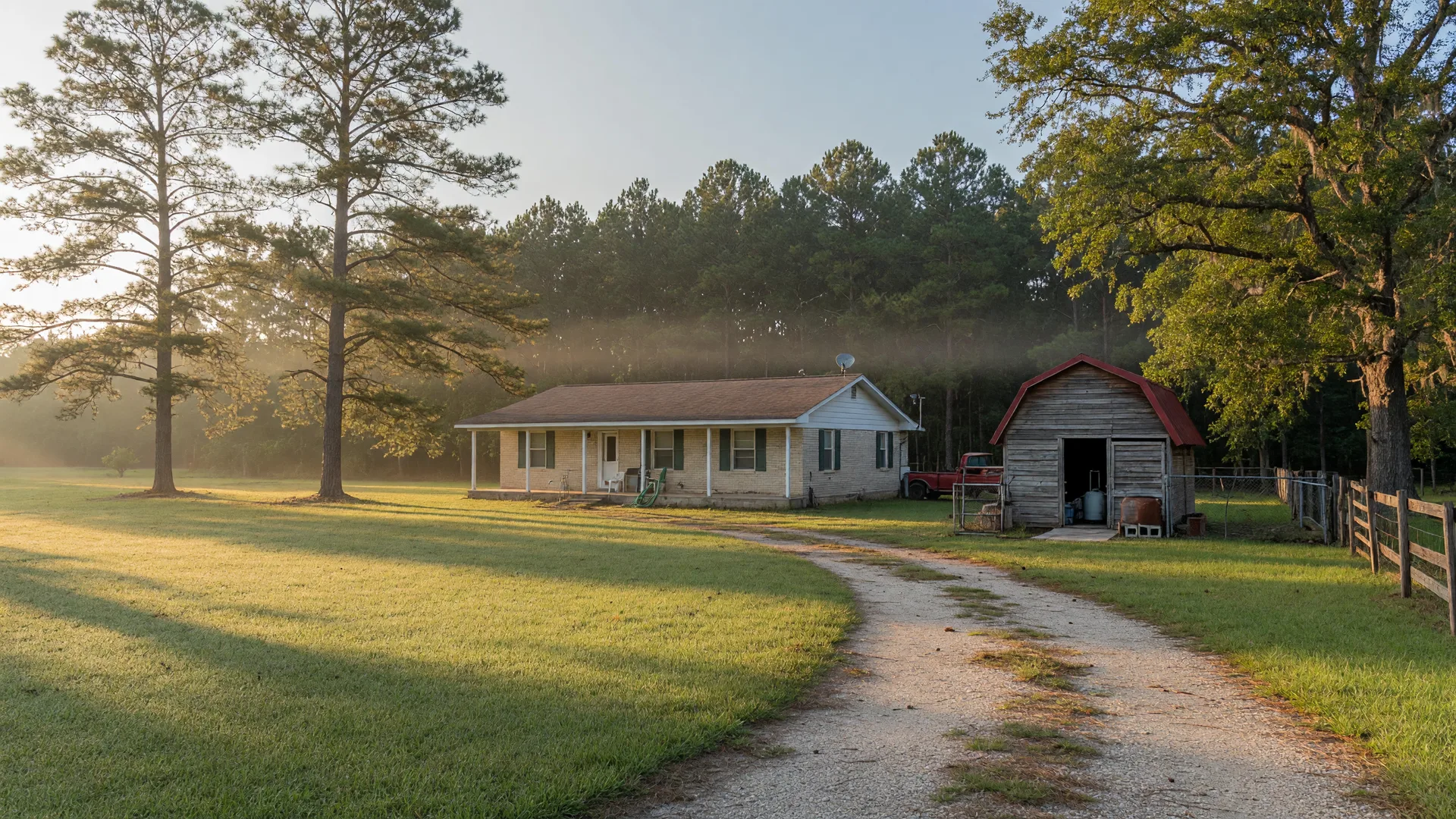
Most of Kingwood, Humble, and Atascocita is served by public water and municipal sewer, which is one less thing those homeowners think about. But in Huffman and across the Northeast Houston area, the picture changes quickly. Much of Huffman, Dayton, and Crosby is unincorporated land where homes sit on larger lots, and a large share of those properties supply their own water from a private well and treat their own wastewater with a septic system. Pockets of Porter and New Caney are the same way, especially on the bigger lots away from the newer MUD-served subdivisions.
None of this makes the house harder to love. It makes the house different to own. When you buy a home on a well and septic, you are not just buying cabinets and square footage. You are buying the water source and the wastewater system as part of the deal, and the age and condition of those systems is every bit as important as the roof and the air conditioner. That is the part buyers sometimes skip, and it is the part that surprises them later.
Know what you are taking on before you fall in love
A well and septic system are not defects. They are infrastructure, and they are the kind of infrastructure you maintain on your own schedule and your own budget. A home on a well usually comes with a pump, a pressure tank, and often a water softener or filtration system, and all of it is yours once you close. A home on septic comes with a tank buried in the yard, a drain or spray field, and rules about what you can and cannot flush, and eventually, a pumping schedule you are responsible for keeping.
The smart way to buy one is to treat the inspection the same way you treat the home inspection, as a line item in the deal rather than an afterthought. Two separate questions matter: is the system working, and is the water safe? They are answered by two different professionals, and both answers should be in your hand before you remove your contingencies.
The well: two separate questions
The first question is mechanical. A well inspection checks the pump, the pressure tank, the well cap, the casing, and the wiring, and it runs a flow test to measure how fast the well produces water. A flow rate of about 3 to 5 gallons per minute is comfortable for a family of four. Anything under roughly one gallon per minute is a serious red flag, because a well that cannot keep up is a well that will not support daily life, and some lenders will not finance a home against a well that fails the flow test.
The second question is about quality. The inspection tells you the well works; a certified laboratory test tells you the water is safe. Have a third party pull a sample and test for coliform bacteria, E. coli, nitrates, and lead, plus any other contaminants common to your specific area. This matters more than most buyers realize: if you are using an FHA or VA loan, documented well inspections and clean water test results are part of the underwriting, so the testing is not optional on those purchases. It is a condition of the deal.
A quick visual check goes a long way too. The wellhead should be properly sealed with no cracks or water damage, and the well should sit up-slope from the septic field, not downhill from it. If the arrangement looks backwards, or if the well cap has clearly been sitting in standing water, add a licensed well contractor to your list before closing.
The septic system: size, age, and the Texas rules
A septic inspection confirms that the tank is sound, that the drain or spray field is working, and that the whole system is sized for the house it serves. The county issued a permit when the system was installed, and the inspection should confirm that permit matches what is actually in the ground. In Texas, on-site sewage facilities are governed by the state's rules under 30 TAC Chapter 285, and both Harris County, which includes Huffman and Crosby, and Liberty County, which includes Dayton, require a permit for septic work filed through the local health department.
The soil matters as much as the tank. The heavy clay that covers much of the Northeast Houston area drains slowly, and in many spots that forces an aerobic treatment unit, called an ATU, instead of a conventional gravity system. Aerobic systems treat wastewater more aggressively, which is why they are allowed on tighter soils, and they cost more up front and more to keep running. They also come with a state-required maintenance contract, typically in the $300 to $500 per year range, and the full annual cost including electricity and service usually lands between $600 and $1,100.
If the home you are buying already has a working septic system, the age and service history are the numbers you want. Ask how old the tank is, when it was last pumped, whether the maintenance contract transfers with the property, and whether the previous owner kept the records. A system that has been serviced on schedule is a non-event. A system with no records and an unexplained soggy spot in the yard is a phone call waiting to happen.
What the costs actually look like
It helps to see the price tags before you put a home under contract, even though most buyers will never pay them all. Drilling a new residential water well in Texas typically runs about $6,000 to $30,000 installed, with most single-family wells landing between $9,000 and $20,000 and contractors pricing by depth at roughly $25 to $65 per foot. A conventional septic system runs about $6,300 to $10,000, while an aerobic system needed for heavy clay soil runs from $10,000 to $20,000 or more. On a new rural build where both are installed from scratch, the realistic combined budget is $15,000 to $50,000 depending on depth, soil, and house size.
On a purchase, the math is usually gentler than those numbers suggest, because the systems already exist. The real question is their remaining life, and that is exactly what the inspections answer. If the well is 20 years old and pumping at the edge of the flow threshold, or if the septic tank is undersized for four bedrooms, those are legitimate negotiation points before you remove your contingencies. You would rather find them during the option period than after closing.
And because inspection and testing fees, plus any immediate repairs, are real cash at closing, they belong in your cash-to-close total before you write the offer. Use my free buyer cash to close tool to lay out every line item, down payment, closing costs, prepaids, and the well and septic work on top, so there are no surprises on settlement day.
How to handle well and septic in your offer
The option period in Texas is where this due diligence happens, and it is plenty of time if you schedule the right people. Order the well inspection and water test and the septic inspection in the first days, not the last. Ask for the seller's records up front: the well's service history, the septic pumping dates, and any permits from the county. A seller with clean records is usually a seller with a well-maintained property. A seller who cannot produce a single document is worth extra scrutiny.
When the reports come back, the negotiation is straightforward. Minor repairs, a tune-up, or a fresh pumping are reasonable requests. A failing well or an undersized septic system is a bigger conversation, and in that case you can negotiate a credit, a replacement allowance, or a price reduction that reflects the real cost, then decide whether the deal still works for you. What you should not do is skip the due diligence to save a few hundred dollars. Replacing a well or septic system after closing easily runs five figures, and it is not covered by your homeowners insurance.
How the towns compare
The Northeast Houston area is not one neighborhood, and the well and septic picture is a good example of why. In Huffman, served by Huffman ISD, larger wooded lots are the appeal and private systems are routine, so the inspection list above is a standard part of buying there. In Dayton, in Liberty County, acreage and rural living are the draw, and the county permit process is part of the game. In Crosby, closer to the bayou country of Harris County, you will find a mix of established acreage tracts and newer subdivisions, so the utility setup varies street by street, and the listing or the seller's disclosure tells you which one you are looking at.
Porter and New Caney sit somewhere in the middle. Newer master-planned communities there are built on public water and MUD sewer, while the older lots and the bigger acreage tracts still run on wells and septic. That split is exactly why the first question any buyer in Porter or New Caney should ask is not about the house at all. It is about the utilities. My Porter neighborhood guide and New Caney neighborhood guide walk through the utility picture and what it means for your budget.
And if you are focused on the rural towns themselves, the Huffman guide, the Dayton guide, and the Crosby guide cover lot sizes, schools, and daily life in each community, so you can compare them with the well and septic question in mind rather than in spite of it.
Budget for the systems, not just the mortgage
The monthly reality of an acreage home includes more than the mortgage payment. A property with a well has electricity running the pump, and often filters or a softener that need servicing. A property with an aerobic septic system has that maintenance contract every year, plus pumping every few years. These are steady, predictable line items, usually a few hundred to about a thousand dollars a year total, and they are easy to plan for once you know they exist.
The mistake buyers make is running the numbers on the purchase price alone and ignoring homeowner's insurance, property taxes, and utility-system upkeep. My free comfort range finder works backwards from the monthly budget you are comfortable with and shows what home price that actually supports, including the line items most calculators forget. And when you land on a price, my Texas-specific payment calculator shows the full payment picture so the acreage dream fits the budget on purpose, not just on paper.
The bottom line
A home on a well and septic system in the Northeast Houston area is a wonderful kind of independence. You control your water, you are not on a municipal sewer bill, and the acreage lifestyle in Huffman, Dayton, and Crosby is exactly why people move there. The systems are not a mystery, and they are not a reason to walk away. They are a reason to do your homework, to inspect with licensed professionals, to read the records, and to price the truth into your offer.
If you are weighing an acreage purchase and want a clear-eyed read on the numbers before you decide, my tools and resources hub pulls together every calculator, neighborhood guide, and checklist in one place, so you can go into the option period with questions, not doubts.
Frequently Asked Questions
How much does it cost to replace a septic system in the Northeast Houston area?
A conventional septic system runs roughly $6,300 to $10,000, while an aerobic system, which the heavy clay soil in much of the region requires, runs $10,000 to $20,000 or more. On top of the installation, an aerobic system carries a state-required maintenance contract and an annual upkeep cost of about $600 to $1,100.
How much does it cost to drill a water well in Texas?
Residential well drilling in Texas typically runs about $6,000 to $30,000 installed, with most single-family wells landing between $9,000 and $20,000 depending on depth. Contractors price by the foot, usually around $25 to $65 per foot, so the geology of the specific property drives most of the cost.
Do I have to test the well water when buying a home in Huffman, Dayton, or Crosby?
You should always test, and on FHA and VA loans, documented clean water test results are required before closing. Have a certified lab test a third-party sample for coliform bacteria, E. coli, nitrates, and lead, plus any contaminants common to your area. Treat it as a condition of the deal, not an optional extra.
What flow rate should a well produce for a family home?
A well producing about 3 to 5 gallons per minute is comfortable for a family of four. Anything under roughly one gallon per minute is a red flag that can kill the financing, because the well cannot keep up with daily demand. The flow test is a standard part of a licensed well inspection.
Who pays if the well or septic fails during the inspection?
That is a negotiation, not a fixed rule. During the option period, you can ask the seller to repair, replace, or credit the cost of a failing well or septic system, or adjust the price to reflect the work. That is why the inspections happen before you remove your contingencies, so the price reflects the truth of the systems.

Diane Hibbs
Strategic Real Estate Advisor, eXp Realty. License #813481. I help buyers and sellers across the Northeast Houston area make major housing decisions with clarity and confidence.